

1. It Is Not a Normal Size
A standard hardcover is made for a shelf.
The Codex is made for a table, a library, and a long look.
At 25 × 35 cm (10 × 14 in), the book gives illustrations, mechanisms, portraits, and historical scenes room to breathe.
A book this large costs more to print, bind, pack, and ship before the first illustration is even added.
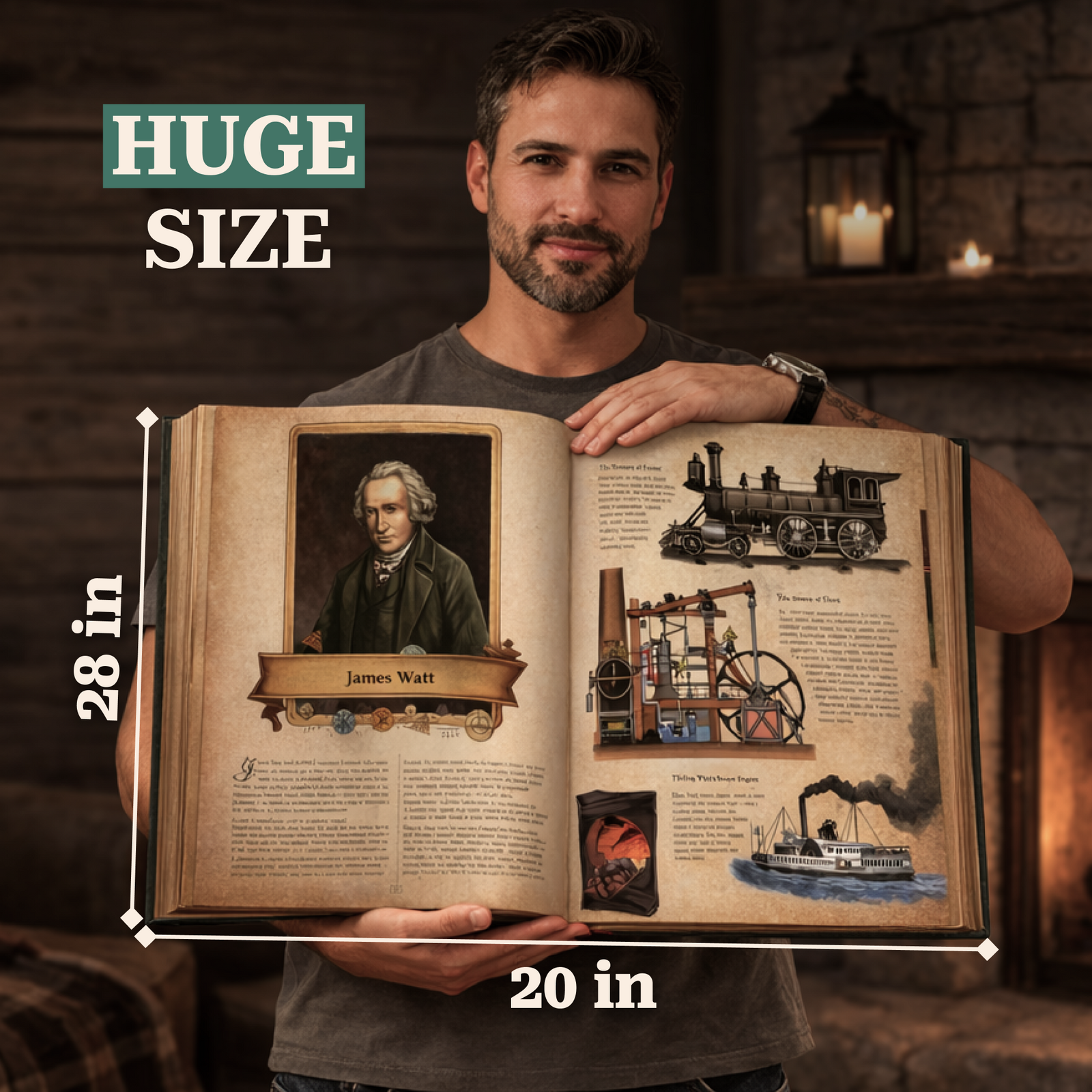
2. It Weighs Around 4 kg (8.8 lb)
This is not a light decorative book.
At approx. 4 kg (8.8 lb), The Codex feels substantial because it is substantial: hundreds of pages, heavy paper, large format, and a collector-style build.
You feel the price before you read a word.
3. It Contains 900+ Original Illustrations
The artwork is not decoration.
It is part of the reading experience.
Every spread is built around visual storytelling: inventions, inventors, mechanisms, tools, machines, and the ideas that shaped civilization.
This is not a text book with pictures. It is a visual encyclopedia.

4. It Was Created with 12 Ukrainian Artists
The Codex was not built from stock images or generic visuals.
It was created with 12 Ukrainian artists working in one consistent Da Vinci-inspired style: historical, mechanical, detailed, and atmospheric.
A consistent illustrated world takes time, skill, and human hands.
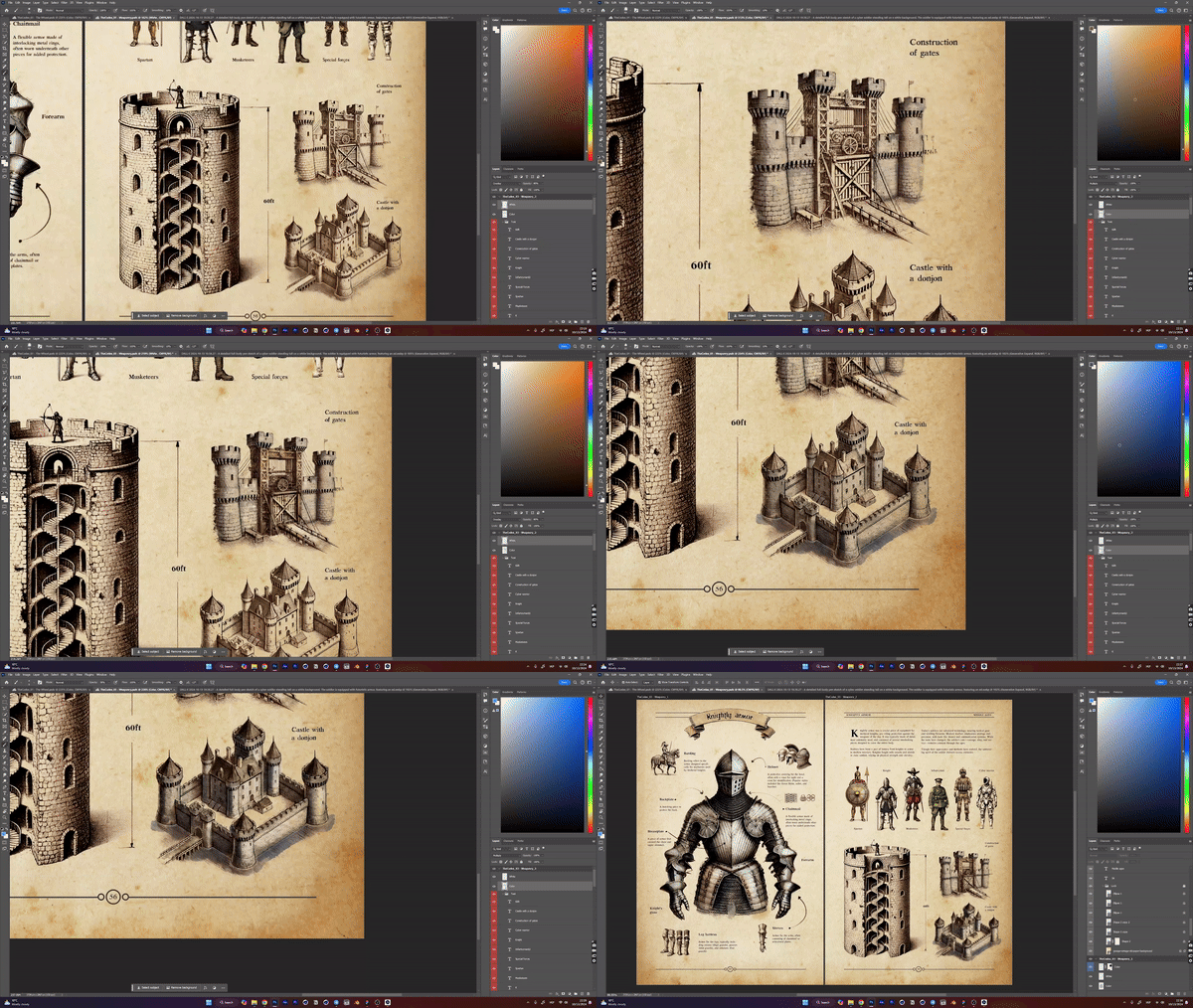

5. It Took Years to Develop
A book like this is not assembled quickly.
The team had to research, write, edit, illustrate, design, proof, and prepare hundreds of pages across the history of human invention.
The Codex was built spread by spread, not generated by AI overnight.
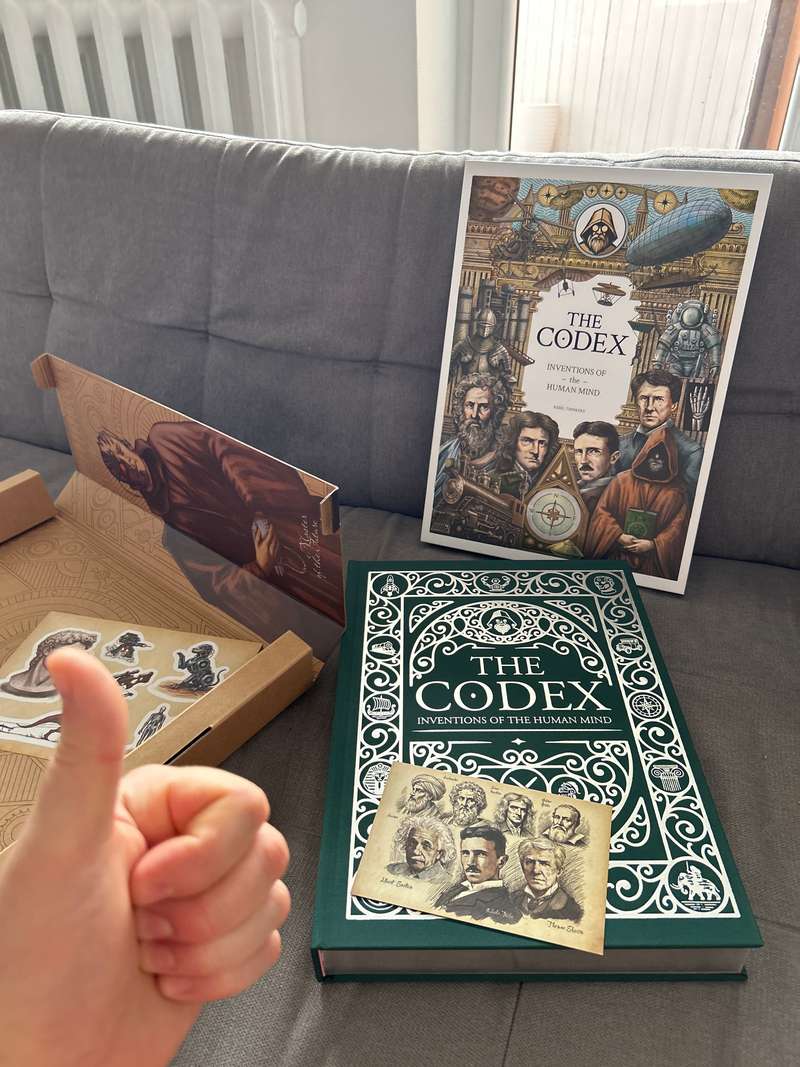
"It looks like an old medieval book, but it has all the inventions right in every detail. It's a really different feeling having this book in hand instead of looking something up on the internet. This book works even without internet and electricity. And the illustrations are much better than a lot of internet sides."
Joey M., verified buyer, Boston, USA
6. 160 gsm Paper and Offset Printing
Thin paper and cheap printing can ruin an illustrated book.
That is why The Codex is printed on 160 gsm premium paper using offset printing, the same production method used for high-quality art books and collector editions.
The paper gives each page weight, opacity, and a substantial feel. Offset printing keeps the illustrations sharp, consistent, and rich across hundreds of pages.
In a visual book, paper and printing are not details. They are part of the experience.
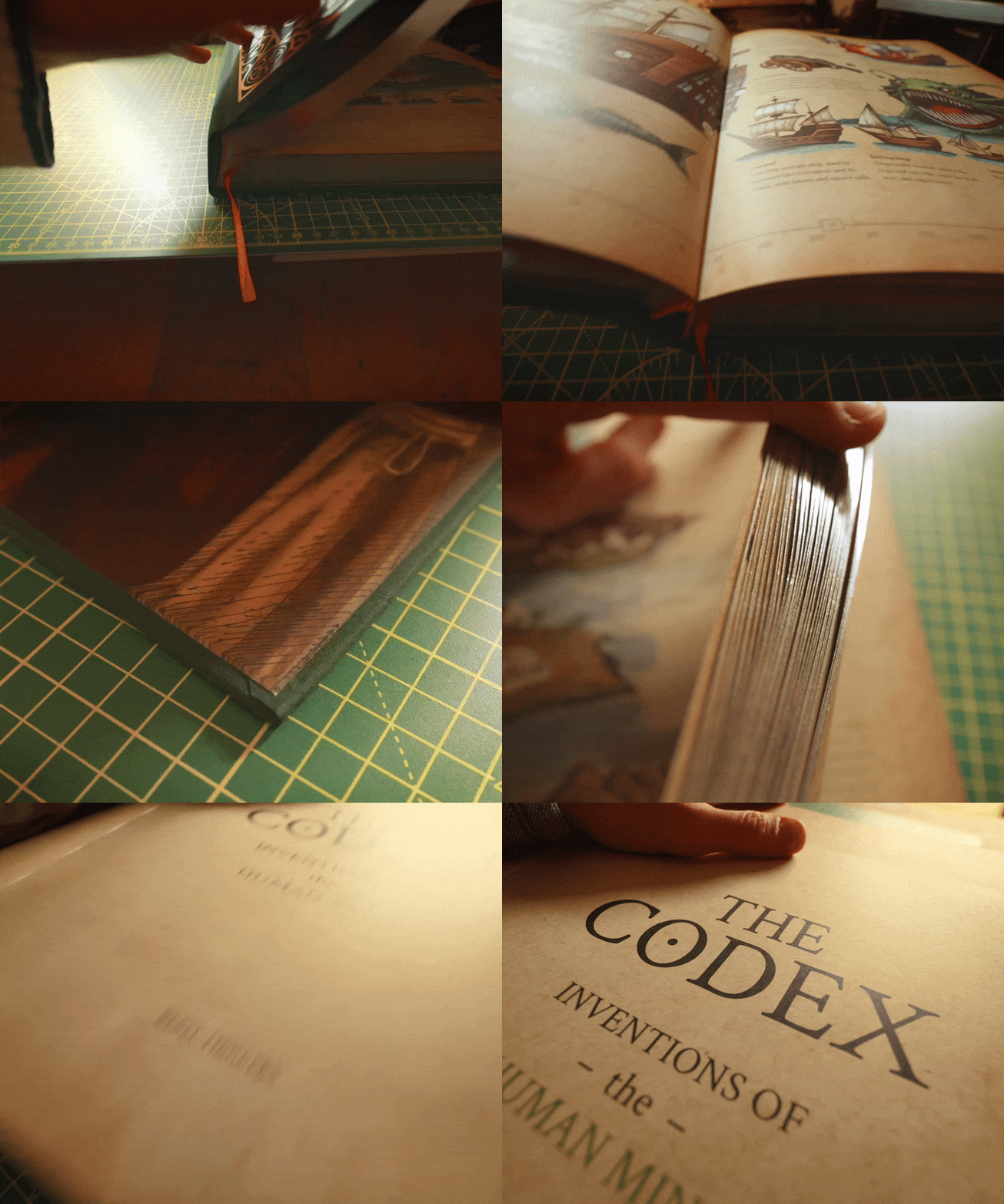
7. The Cover and Binding Matter
A heavy book needs stronger construction.
The cover, spine, paper block, and binding must support a large-format book that will be opened, displayed, lifted, gifted, and revisited.
A collector’s book has to survive more than one reading.

What You Are Paying For
A book with this format, illustration count, and production specification belongs closer to the collector-book category than the normal hardcover shelf.
- Large format
- Protective Slipcase
- Premium paper
- Years of work