



Top Military Strategy Books: Quick Comparison
These books serve different purposes. Compare who each book suits, its reading difficulty, and its main limitation before choosing where to begin.
Swipe sideways to compare every column.
| Book and author | Best for | Difficulty | Main limitation | ||
|---|---|---|---|---|---|
Visual readers and broad overviews |
Accessible |
Broad survey, not a strategy textbook |
|||
A short classic with scholarly commentary |
Moderate |
Aphoristic and rooted in an ancient context |
|||
Advanced theory and close study |
Advanced |
Dense, unfinished, and not a linear manual |
|||
Historical cases and strategic maneuver |
Moderate–advanced |
Strong interpretive thesis |
|||
Readable historical reflection |
Moderate |
Selective rather than comprehensive |
|||
A broad intellectual history |
Advanced |
Much broader than military strategy alone |
|||
Deep campaign analysis |
Advanced |
Long and tightly focused on Napoleon |
|||
Logistics through historical cases |
Advanced |
Historical analysis, not a current logistics manual |
|||
A short tactical learning narrative |
Beginner–moderate |
Colonial-era assumptions require context |
|||
First-person tactical cases |
Moderate |
One commander’s perspective |
|||
A compact theory-and-practice primer |
Moderate–advanced |
Mid-century colonial context |
|||
Contemporary field analysis |
Moderate–advanced |
Centered on Western interventions |
|||
A current scholarly reference |
Advanced |
Very long; chapter styles vary |
|||
Technology and defense policy |
Moderate |
U.S.-focused and time-sensitive |
|||
Modern strategic competition |
Advanced |
A 2020 analytical snapshot |
Illustrated Military Strategy Books
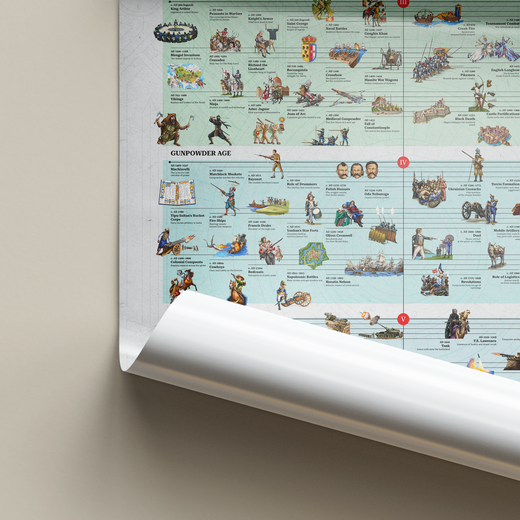
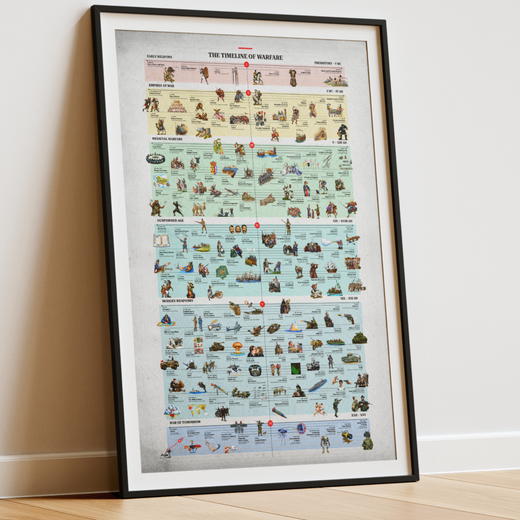
For readers who learn through maps, diagrams, formations, weapons, and visual comparisons, an illustrated overview can make the development of warfare easier to follow.


Classic Military Strategy Books and Core Principles
These foundational works approach strategy very differently: Sun-tzu through compressed principles and layered commentary, Clausewitz through an extended theory of war and policy.

Classical strategy
The Art of War — Sun-tzu, translated and edited by John Minford
The 2009 Penguin Classics edition presents Sun-tzu’s compact text in John Minford’s translation, then repeats it with extensive commentary from the traditional Chinese interpretive canon. That structure makes the edition more useful than a bare quotation collection: readers can see how ideas about preparation, intelligence, deception, adaptability, discipline, and avoiding disadvantage have been understood over time.
It suits readers who want a concise classical work but still need historical and editorial support. The prose is aphoristic rather than systematic, so the book rewards rereading more than a single linear pass. Treat it as a foundational text in strategic thought, not as ready-made guidance for contemporary conflict. Translation choices and commentaries matter, which is why the exact edition should be stated rather than treating every version as interchangeable.
- Best for
- Readers beginning with a classical text and anyone who values an annotated edition
- Keep in mind
- Its ancient setting, compressed style, and long commentary tradition make simplistic modern applications unreliable.

Classical theory
On War — Carl von Clausewitz, translated by Michael Howard and Peter Paret
The Princeton edition of On War, translated and edited by Michael Howard and Peter Paret, is the standard English edition for readers who want Clausewitz’s fullest argument. The work examines war as an instrument of policy and develops ideas associated with uncertainty, friction, moral forces, defense, offense, and the relationship between political purpose and military action. Introductory essays and Bernard Brodie’s commentary help place the unfinished text in context.
This is the strongest choice here for readers ready to study military theory closely rather than collect short maxims. It is demanding because Clausewitz revised parts of the manuscript unevenly and did not complete the whole work before his death. Read it slowly, use the editorial apparatus, and avoid reducing the argument to one famous sentence. It is a framework for thinking about war, not a step-by-step field manual.
- Best for
- Advanced readers, students of strategic theory, and readers willing to work through a difficult primary text
- Keep in mind
- The book is dense, unfinished, and internally uneven; abridged quotations can distort the argument.


Grand Strategy and the Indirect Approach
These books move beyond the immediate battlefield to examine long-term aims, the use of resources, historical judgment, and the development of strategic thought.

Indirect approach
Strategy — B. H. Liddell Hart
B. H. Liddell Hart’s Strategy develops his case for the indirect approach through a long survey of campaigns. The 1991 Plume edition emphasizes movement, flexibility, surprise, alternative objectives, and the attempt to disturb an opponent’s physical and psychological balance rather than relying on frontal collision. It is useful for readers who want to see a strong strategic thesis tested against many historical examples.
The book is more argumentative than neutral. Liddell Hart selects and interprets cases to support the indirect approach, and some of his historical judgments have been debated. That does not remove the book’s value, but it means readers should compare its claims with campaign histories and other theorists rather than accepting every example as settled. Choose it for a distinctive interpretation of strategy, not for a comprehensive or universally accepted history of warfare.
- Best for
- Readers interested in maneuver, historical cases, and a clearly argued strategic thesis
- Keep in mind
- Its case selection supports a strong authorial argument; it is not a balanced survey of every strategic approach.

Grand strategy
On Grand Strategy — John Lewis Gaddis
John Lewis Gaddis turns lessons from Yale’s grand strategy program into a readable series of historical reflections. The book ranges from the ancient world through the twentieth century and asks how leaders connect large objectives with the means available to achieve them. Its recurring concern is judgment: holding long-term direction while adapting to constraints, uncertainty, and changing circumstances.
This is a good bridge between classical texts and modern leadership history. Readers meet figures and writers including Herodotus, Thucydides, Sun Tzu, Augustine, Machiavelli, Clausewitz, Lincoln, and Roosevelt without having to begin with a technical textbook. The tradeoff is selectivity. Gaddis offers an essayistic, personal synthesis rather than a systematic survey of grand strategy, and the chosen examples do not represent every region or tradition. Read it for the connections and questions it raises, then follow the periods that interest you into more specialized studies.
- Best for
- General readers who want an accessible introduction to aims, means, leadership, and historical judgment
- Keep in mind
- The structure is selective and essayistic rather than a complete theory or global survey.

History of strategic thought
Strategy: A History — Lawrence Freedman
Lawrence Freedman’s Strategy: A History is the broadest intellectual survey in this guide. Across roughly 750 pages, it follows strategic thinking from classical and military traditions into revolutionary politics, social movements, and business. That range helps readers see that strategy is not simply a list of battlefield principles: it concerns the relationship between goals, power, resistance, coalitions, narratives, and adaptation.
The book works best for readers who want context around the major thinkers rather than one author’s doctrine. Its scale allows Freedman to compare different domains, but it also means substantial portions move beyond military strategy. Someone looking only for battlefield tactics will find the scope too wide, while a reader studying how strategic language developed across institutions will find that breadth valuable. It is an excellent reference and long-form study, but not the quickest first book on the subject.
- Best for
- Readers seeking a wide intellectual history and a reference that connects military, political, and social strategy
- Keep in mind
- Its very broad scope includes much more than warfare and makes it a substantial reading commitment.


Military Strategy Books on Campaigns and Logistics
Campaigns depend on more than an original plan. These two studies show how command decisions interact with movement, supply, administration, and the limits of available resources.

Campaign planning
The Campaigns of Napoleon — David G. Chandler
David G. Chandler’s The Campaigns of Napoleon is a large, detailed study of the campaigns personally conducted by Napoleon. The book examines strategic maneuver, operational planning, battlefield decisions, command, and the evolution of Napoleon’s methods across victories and defeats. Chandler draws on correspondence, memoirs, and earlier military studies while warning that contemporary testimony must be handled carefully.
This is the guide’s best choice for a reader who wants to remain with one commander and see strategy tested repeatedly in changing circumstances. The depth makes it useful for campaign study, but the same depth makes it a poor quick introduction: the Scribner edition runs well over a thousand pages. It also cannot stand in for a general history of military strategy. Its geographical and chronological focus is Napoleonic warfare, and its greatest value lies in the detail of that specific case.
- Best for
- Readers ready for a deep campaign study with extensive operational and historical detail
- Keep in mind
- It is exceptionally long and focused on Napoleon rather than military strategy across periods.

Military logistics
Supplying War: Logistics from Wallenstein to Patton — Martin van Creveld
Martin van Creveld shifts attention from plans and battles to the practical systems that make campaigns possible. The second edition of Supplying War studies movement, transport, administration, and supply through cases extending from early modern European warfare to the Second World War. By asking what armies could actually move and sustain, it shows why strategic intentions cannot be assessed apart from roads, food, fuel, transport, distance, and administrative capacity.
This is the strongest specialist choice in the list for understanding logistics as a constraint on operations. It is an academic historical argument, not a current military logistics handbook, and its case selection does not cover every theater or modern supply system. Readers should use it to understand how logistical limits shaped particular campaigns and to test assumptions found in battle-centered histories, rather than treating its historical conclusions as a complete model for contemporary warfare.
- Best for
- Readers interested in the material and administrative limits behind campaigns
- Keep in mind
- The cases are historical and selective; the book is not a contemporary logistics manual.


Military Tactics Books
Tactics concern decisions made closer to the immediate engagement. These books teach through scenarios and personal cases, so their historical context and authorial perspective must remain visible.

Tactical learning narrative
The Defence of Duffer’s Drift — Ernest D. Swinton
First published in 1904, The Defence of Duffer’s Drift teaches through repetition. A young officer with fifty men must defend a river crossing in six successive versions of the same fictional situation. Each failure exposes problems involving terrain, preparation, concealment, security, observation, and the use of available resources. The recurring scenario makes the reasoning easy to follow even for readers without a long background in military theory.
The Australian Army’s professional-development site describes it as an early example of the tactical narrative genre and includes it in a land-warfare reading context. Its historical setting matters. The story comes from the Boer War era, and some assumptions about civilians and colonial authority are inappropriate for modern practice. Read it as a compact historical exercise in noticing errors and revising a plan, not as current doctrine or a source of universally transferable instructions.
- Best for
- Beginners who prefer a short scenario that develops through repeated mistakes and corrections
- Keep in mind
- The colonial setting and some treatment of civilians are dated and require explicit historical context.

Tactical memoir
Infantry Attacks — Erwin Rommel
Infantry Attacks draws on Erwin Rommel’s First World War experiences to reconstruct infantry actions and the decisions he believed shaped them. The 2023 Greenhill Books edition is a 304-page illustrated reissue with a foreword by historian Gary Sheffield and an introduction by Manfred Rommel. The narrative provides detailed cases involving movement, terrain, initiative, surprise, and small-unit leadership from one participant’s point of view.
That perspective is both the book’s strength and its limitation. It gives readers direct access to how Rommel framed his own actions, but memoir is not neutral analysis, and examples from the First World War cannot simply be transferred to later conflicts. The book is best read beside broader histories that can confirm context, compare other participants’ accounts, and separate retrospective interpretation from events. Choose it for historical tactical cases, not for a complete or current doctrine of infantry operations.
- Best for
- Readers who learn from first-person World War I tactical cases
- Keep in mind
- It is a retrospective account from one commander and reflects the warfare and assumptions of its period.


Books on Guerrilla and Counterinsurgency Strategy
Irregular conflicts are political and social as well as military. These influential books offer distinct frameworks, but both need to be read with attention to place, period, and perspective.

Counterinsurgency theory
Counterinsurgency Warfare: Theory and Practice — David Galula
David Galula’s short book sets out a structured theory of insurgency and counterinsurgency, moving from the conditions that support an insurgency to strategy, tactics, and operations. The 2006 Praeger edition includes a foreword by John A. Nagl and presents the work as a classic of the counterinsurgency era. Its compact organization makes the author’s model easier to identify and critique than a diffuse campaign narrative.
Readers should not mistake clarity for universality. Galula wrote from the experience of a French officer in the mid-twentieth century, and the book is inseparable from colonial conflicts and the political assumptions of that period. Contemporary readers need additional historical scholarship and local perspectives to assess where the model fits and where it fails. It belongs in this guide because it has been influential, not because every prescription should be accepted or applied without qualification.
- Best for
- Readers studying a historically influential, compact counterinsurgency framework
- Keep in mind
- Its mid-century French colonial context and prescriptive model require critical comparison with later scholarship.

Irregular conflict
The Accidental Guerrilla: Fighting Small Wars in the Midst of a Big One — David Kilcullen
David Kilcullen uses cases from Southeast Asia, the Afghanistan–Pakistan border, the Middle East, and the Horn of Africa to argue that local fighters, transnational groups, communities, and outside intervention cannot be treated as one undifferentiated enemy. The book emphasizes social dynamics, local grievances, and the risk that an external response can broaden a conflict rather than isolate it.
This is a useful modern counterpart to Galula because it is more openly shaped by post-9/11 campaigns and field observation. It is still a particular analytical framework, not a neutral global history of insurgency. Its examples are centered on Western policy problems and the conflicts in which the author worked or advised. Readers should compare its claims with country-specific histories and scholarship produced from within the societies discussed. Choose it for a case-based argument about adaptation and intervention, not for a universal formula.
- Best for
- Readers examining post-9/11 insurgency, intervention, and the importance of local political context
- Keep in mind
- The analysis is centered on Western interventions and a specific period of counterinsurgency debate.


Modern Military Strategy Books: Theory and Technology
These works address the digital age, organizational adaptation, modern competitors, and the continuing value of historical strategic thought. Their claims are more time-sensitive than the classical texts above.

Modern strategic reference
The New Makers of Modern Strategy: From the Ancient World to the Digital Age — edited by Hal Brands
This 2023 Princeton University Press anthology brings together a large group of scholars to examine strategic thinkers, political leaders, and changes in war and statecraft from antiquity to the digital age. The volume is explicitly global and comparative, with substantial attention to the Cold War, the post-9/11 period, and contemporary figures alongside classical subjects. Its multi-author structure lets readers compare traditions and then move directly to the chapters most relevant to their interests.
At roughly 1,200 pages, it is a reference work rather than a quick cover-to-cover introduction. Different contributors bring different methods and writing styles, so the volume does not offer one seamless theory. That variety is useful for advanced readers but can be demanding for a beginner. Choose it when you want current scholarly breadth and a book to consult over time; choose a shorter single-author study when continuity and accessibility matter more.
- Best for
- Advanced readers, students, and anyone seeking a current multi-author reference on strategic thought
- Keep in mind
- Its length and changing chapter voices make it better for selective study than for a quick first read.

Technology and defense policy
The Kill Chain: Defending America in the Future of High-Tech Warfare — Christian Brose
Christian Brose argues that modern military advantage depends less on improving isolated platforms and more on connecting sensors, decision-makers, and weapons into faster, more adaptable networks. The book focuses on artificial intelligence, autonomous systems, communications, and the organizational changes the author believes the United States needs to deter or prevail against technologically capable rivals.
The accessible policy style makes emerging defense debates easier to enter than a technical textbook would. It also means the book advances a specific American reform argument. Its threat assessments, institutional recommendations, and technology examples are time-sensitive, and readers should check later developments rather than treating a 2020 argument as a permanent forecast. Choose it for a clear case about networks and defense modernization, then pair it with independent analysis of procurement, ethics, escalation, and the limitations of technology-centered solutions.
- Best for
- Readers interested in defense networks, AI, autonomy, and U.S. military modernization
- Keep in mind
- It is an advocacy-oriented U.S. policy argument, and fast-moving technology can date specific examples.

Contemporary adaptation
The Dragons and the Snakes: How the Rest Learned to Fight the West — David Kilcullen
David Kilcullen examines how both state and nonstate adversaries adapted after the period of Western conventional dominance that followed the Cold War. Using ideas from social learning and evolutionary adaptation, the book discusses nonstate actors as well as Russia, China, North Korea, and Iran. Its central concern is not a catalogue of weapons but the way opponents change methods when direct imitation would leave them at a disadvantage.
The book is valuable for readers comparing modern strategic competition with the irregular-conflict focus of The Accidental Guerrilla. It is also a thesis-driven analysis published in 2020, so later events may support, complicate, or displace parts of its account. The cases are selected to explain adaptation to Western power rather than to provide a complete global history of contemporary warfare. Read it as a structured argument and a starting point for further research, not as a final map of every current threat.
- Best for
- Readers studying how state and nonstate competitors adapt to Western military advantages
- Keep in mind
- It is a thesis-driven 2020 snapshot rather than a complete or continuously updated survey.


Editorial method
How We Selected These Military Strategy Books
We selected books that answer different reading needs rather than repeating one type of recommendation: illustrated overview, classical theory, grand strategy, campaign analysis, logistics, tactics, irregular conflict, and modern technology. We verified titles, authors or editors, editions, scope, and format against publisher pages, catalog records, available tables of contents or excerpts, and professional reading resources. The descriptions distinguish what each book does well from what it does not cover.
This assessment is based on documented contents and published materials; it does not claim that every title was read cover to cover by the Rebel Thinkers team.
Publisher descriptions, edition details, tables of contents, available excerpts, and professional reading resources

Military Strategy vs. Tactics vs. Grand Strategy
These levels overlap, but they answer different questions. Operational art connects campaigns and major operations to broader strategy; tactics concern decisions closer to an engagement.
| Level | Core question | Scope and suggested reading | Important limit | ||
|---|---|---|---|---|---|
Grand strategy |
How should political aims and national resources be aligned? |
States, alliances, and long time horizons. Suggested: On Grand Strategy and Strategy: A History. |
Do not confuse it with a plan for one campaign |
||
Military strategy |
How should military power serve political objectives? |
Wars, theaters, and major campaigns. Suggested: On War and Strategy. |
Theory does not remove uncertainty |
||
Operational art |
How should campaigns and major operations connect battles to strategy? |
Campaigns, sequencing, logistics, and forces. Suggested: The Campaigns of Napoleon and Supplying War. |
The term and practice vary across institutions |
||
Tactics |
How should units act in an engagement? |
Immediate terrain, formations, timing, and local decisions. Suggested: The Defence of Duffer’s Drift and Infantry Attacks. |
Historical cases are not current doctrine |
How to Choose a Military Strategy Book
Choose by subject, reading depth, and format—not by assuming every well-known military book serves the same purpose.
- Start with the question. Choose On Grand Strategy for aims and resources, Supplying War for logistics, The Defence of Duffer’s Drift for a short tactical scenario, or The Kill Chain for a modern technology argument.
- Match the difficulty. The Codex and an annotated Art of War are easier entry points. On War, Strategy: A History, and The New Makers of Modern Strategy demand more time and context.
- Choose the format you will actually use. Visual readers may begin with maps and illustrations; readers who enjoy a sustained argument may prefer theory; readers who learn from cases should choose campaigns, logistics, or memoir. A broad overview and a specialist study often complement one another better than either does alone.
Frequently Asked Questions
Short answers about choosing, comparing, and reading military strategy and tactics books responsibly.
Which military strategy book is best for beginners?
For a visual overview, begin with The Codex of Military History. For a short classical text with scholarly support, use John Minford’s annotated Penguin Classics edition of The Art of War. For a compact tactical narrative, try The Defence of Duffer’s Drift. The best first choice depends on whether you prefer images, theory, or cases.
Are classical military strategy books still relevant today?
They remain relevant as historical frameworks and sources of concepts, not as automatic instructions for modern conflict. Read Sun-tzu, Clausewitz, and Liddell Hart with reliable editions, historical context, and newer scholarship that tests how later readers interpreted their arguments.
Can illustrated military history books help readers understand strategy?
Yes. Maps, formations, diagrams, and visual comparisons can clarify terrain, technology, scale, and sequence. An illustrated overview is especially useful before a specialist study, but it does not replace the extended theoretical argument found in books such as On War or the depth of a campaign monograph.
Which books explain campaign planning and military logistics?
The Campaigns of Napoleon provides a detailed study of campaign design and operational decisions within one historical setting. Supplying War concentrates on movement, transport, administration, and supply across several cases. Reading them together shows why plans and resources cannot be separated.
Do I need a military background to read military tactics books?
No, but the right edition and context help. Start with a clearly structured narrative and check unfamiliar terms, maps, and historical conditions. A memoir or fictional tactical exercise reflects its author and period; it should not be treated as current professional doctrine.
Research
Sources and References
Sources checked
Publisher pages, edition records, and professional reading resources used to verify the authors, editions, scope, and limitations described in this guide.
-
The Codex of Military History
Official product description, format, live price, product images, and availability.
-
The Art of War, Penguin Classics edition
Official edition details, translator and editor credits, structure, and publication information.
-
On War, Princeton edition
Edition history, translators, editorial essays, and book description.
-
Strategy
Official edition details and description of the indirect approach.
-
On Grand Strategy
Official scope, historical subjects, formats, and publication details.
-
Strategy: A History
Official description, edition, ISBN, and scope.
-
The Campaigns of Napoleon
Official scope, research basis, length, and publication details.
-
Supplying War
Official book description, editions, publication data, and logistics focus.
-
The Defence of Duffer’s Drift
Professional reading entry describing the six scenarios, intended audience, and historical context.
-
Infantry Attacks
Official 2023 edition details, format, contributors, and description.
-
Counterinsurgency Warfare: Theory and Practice
Official description, table of contents, edition, and publication details.
-
The Accidental Guerrilla
Publisher description, geographical scope, edition, and author information.
-
The New Makers of Modern Strategy
Official book description, editor, date, and scope from antiquity to the digital age.
-
The Kill Chain
Official subtitle, publication details, technology focus, and U.S. defense-policy argument.
-
The Dragons and the Snakes
Official abstract, case-study scope, date, and publication details.