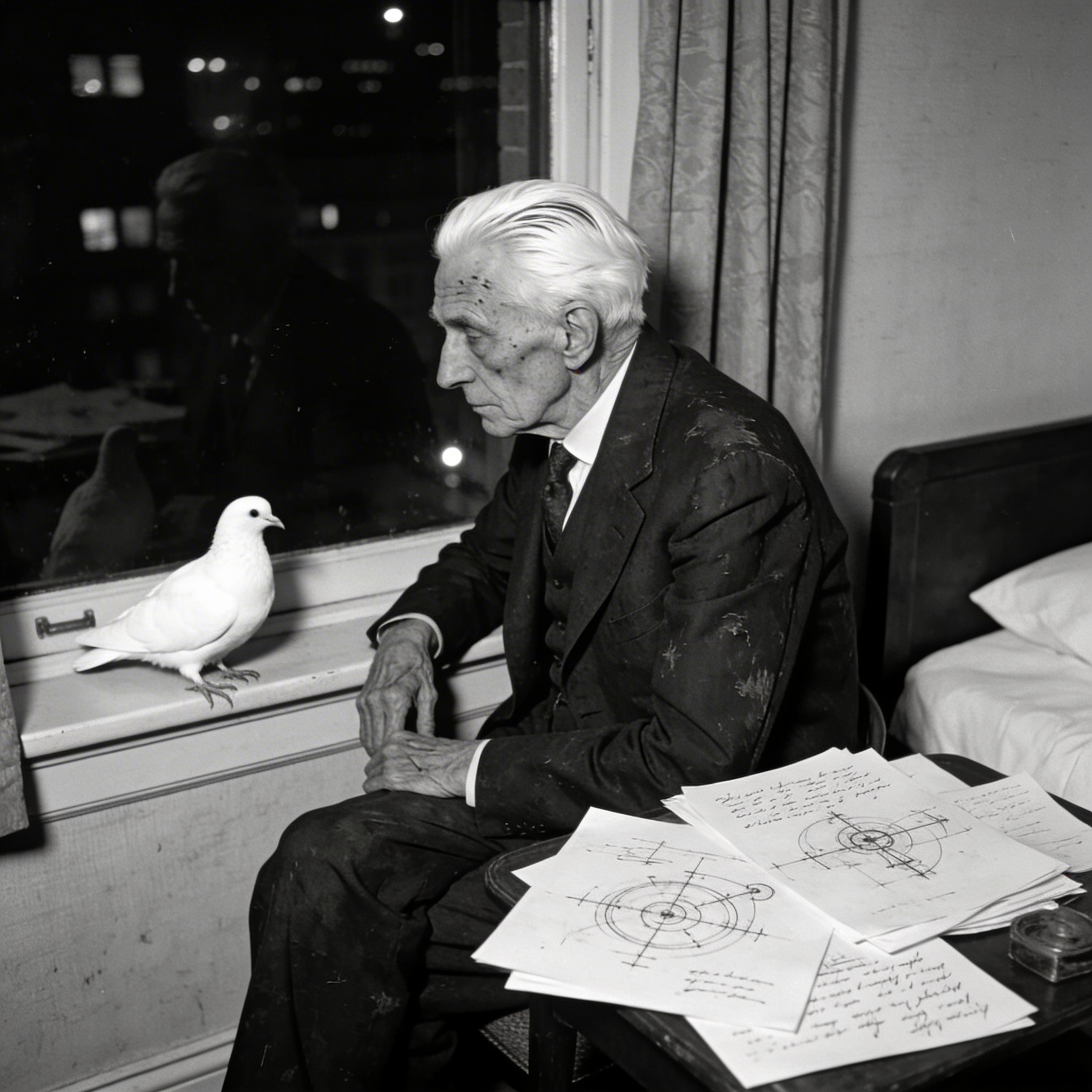
Im Jahr 1943 starb ein 86-jähriger Mann allein in Zimmer 3327 des New Yorker Hotels.
Er hatte kein Geld. Er hatte keine Familie in der Nähe. Seine engsten Begleiter in jenen letzten Jahren waren die Tauben, die er jeden Morgen im Bryant Park fütterte, von denen eine – ein weißes Weibchen mit grau gespitzten Flügeln – er später als die große Liebe seines Lebens bezeichnete.
Der Mann hieß Nikola Tesla. Sie nutzen seine Erfindungen gerade jetzt.
Wenige Wochen nach seinem Tod erließ der Oberste Gerichtshof der Vereinigten Staaten stillschweigend ein Urteil: Tesla, nicht Marconi, war der wahre Erfinder des Radios. Die Entscheidung kam zu spät, um finanziell von Bedeutung zu sein. Seine Patente waren bereits abgelaufen. Sein Turm war bereits abgerissen worden. Sein Labor war bereits abgebrannt.
Doch das Urteil bestätigte, was Ingenieure seit Jahrzehnten gewusst hatten.
Der Mann, der allein in einem Hotelzimmer starb, hatte das elektrische System erfunden, das jedes Gebäude auf der Erde mit Strom versorgt.
Er kam mit vier Cents in Amerika an
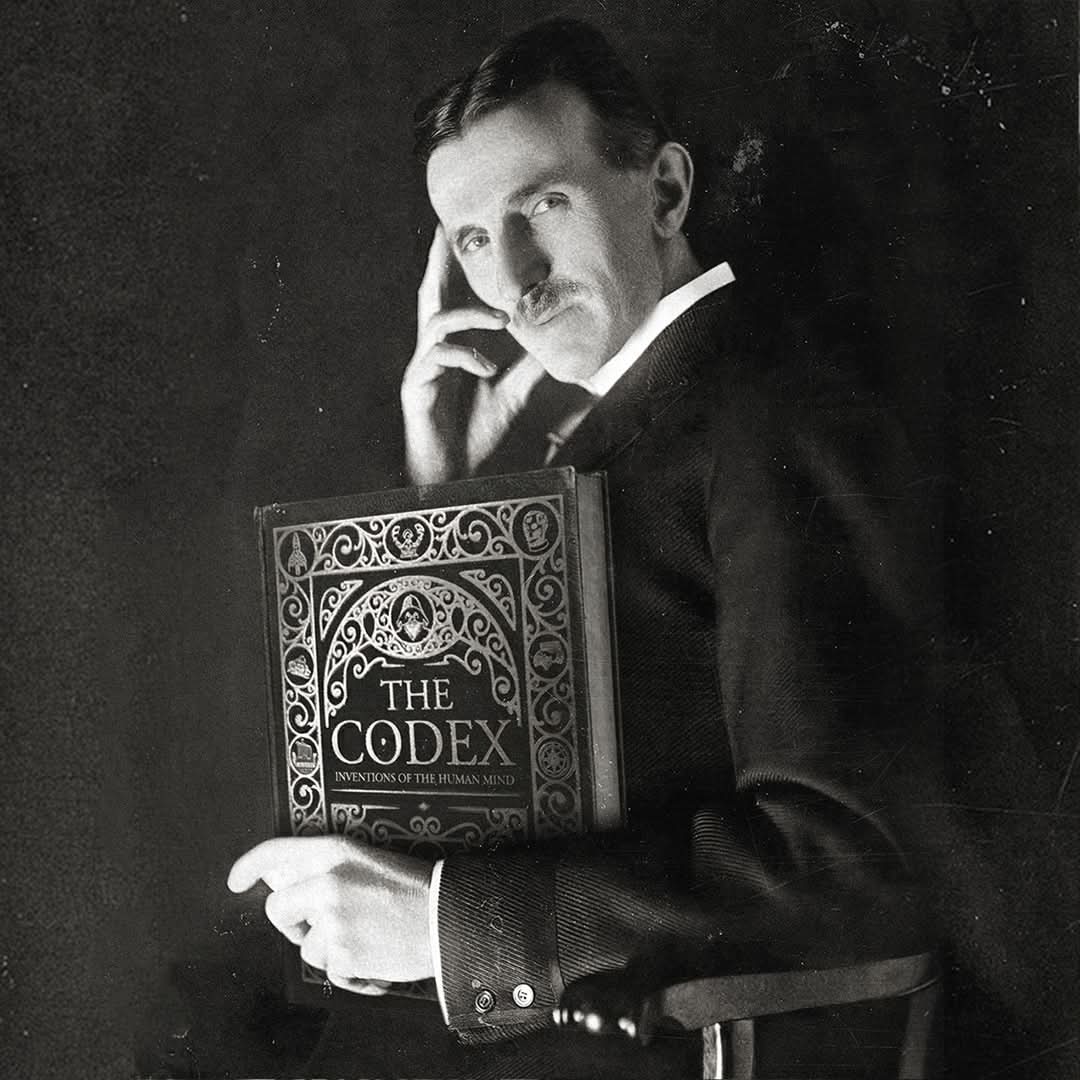
Im Jahr 1884 stieg ein 28-jähriger serbischer Ingenieur in New York City von einem Schiff.
Er hatte vier Cent in der Tasche, Kleider zum Wechseln und ein Empfehlungsschreiben an Thomas Edison.
Tesla war im heutigen Kroatien aufgewachsen, als Sohn eines serbisch-orthodoxen Priesters. Schon als Kind funktionierte sein Verstand anders. Er konnte ganze Bücher nach einmaligem Lesen auswendig lernen. Er konnte sich vollständige, funktionierende Maschinen in seinem Kopf vorstellen – sie drehen, testen, Fehler identifizieren – ohne jemals einen physischen Prototyp zu berühren. Seine Ingenieurprofessoren dachten, er würde schummeln, weil seine mentalen Berechnungen schneller waren als ihre schriftlichen.
Er sprach acht Sprachen. Er hielt Zeit seines Lebens 300 Patente. Er verstand Elektrizität auf eine Weise, die selbst Edison – bereits der berühmteste Erfinder der Welt – nicht verstand.
Tesla hatte eine bessere Idee.
Der Stromkrieg
Edison hat Hunde öffentlich mit Stromschlägen getötet. Er setzte sich dafür ein, dass Wechselstrom in elektrischen Stühlen verwendet wird – damit der Tod in der öffentlichen Meinung mit Teslas System in Verbindung gebracht wird.
Er nannte es „westinghousen“.
Er verlor trotzdem. Der Wechselstrom hat nicht nur den Krieg gewonnen, er hat das ganze Jahrhundert gewonnen. Jede Steckdose in jedem Gebäude auf der Welt läuft mit dem System, das Nikola Tesla entworfen hat – einschließlich der, die den Bildschirm mit Strom versorgt, auf dem Sie dies gerade lesen.

Dann wurde ihm das Radio gestohlen
1895 war Tesla sechs Wochen von der Demonstration einer Funksignalübertragung entfernt.
Sein Labor brannte ab. Er verlor alles.
Während er wieder aufbaute, übertrug ein italienischer Erfinder namens Guglielmo Marconi ein Signal über den Atlantik – unter Verwendung von 17 Patenten Teslas.
Marconi bekam den Nobelpreis. Marconi bekam die Anerkennung. Marconi bekam das Geld.
Tesla sah es geschehen und sagte leise: „Marconi ist ein guter Kerl. Lasst ihn fortfahren. Er benutzt siebzehn meiner Patente.“
Dieser Satz – geduldig, präzise, fast amüsiert – sagt alles darüber aus, wie Nikola Tesla sich durch die Welt bewegte. Er verstand, was geschah. Er glaubte einfach, dass die Wahrheit letztendlich siegen würde.
Das tat sie auch. Fünfzig Jahre zu spät...

Der Turm, der alles verändert hätte
Teslas letzter Traum war ein Turm auf Long Island. Sein Investor – J.P. Morgan – fragte, woher das Geld kommen sollte, wenn jeder Strom aus der Luft ziehen könnte.
Tesla hatte keine gute Antwort.
Die US-Regierung riss den Turm 1917 ab.
Er starb zwei Monate zu früh
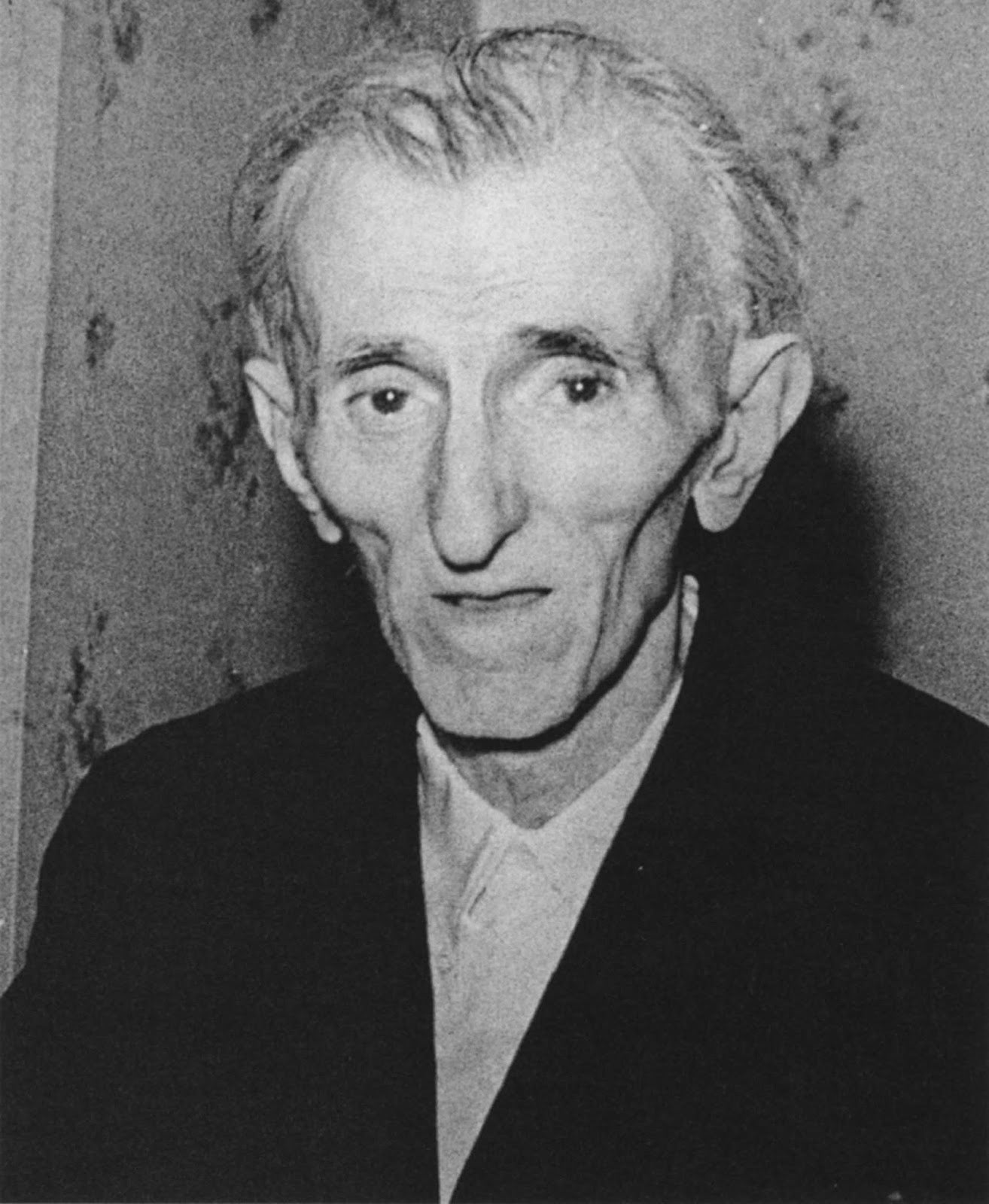
Im Januar 1943 starb Tesla allein in Zimmer 3327 des New Yorker Hotels.
Seine Gefährten in seinen letzten Jahren waren die Tauben, die er jeden Morgen im Bryant Park fütterte.
Zwei Monate später entschied der Oberste Gerichtshof der USA: Tesla, nicht Marconi, war der wahre Erfinder des Radios.
Zwei Monate zu spät, um eine Rolle zu spielen. Zwei Monate zu spät, um es zu hören.
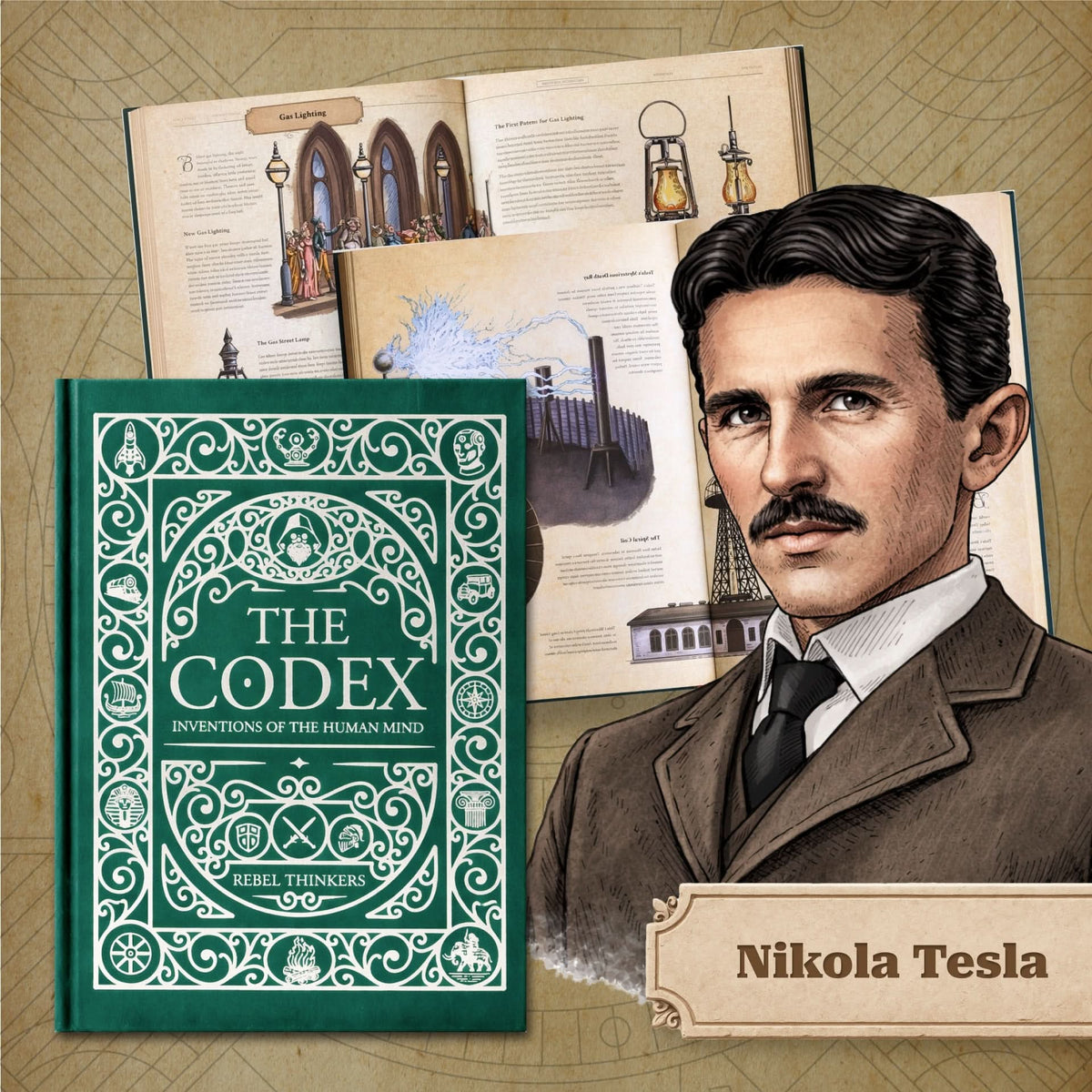
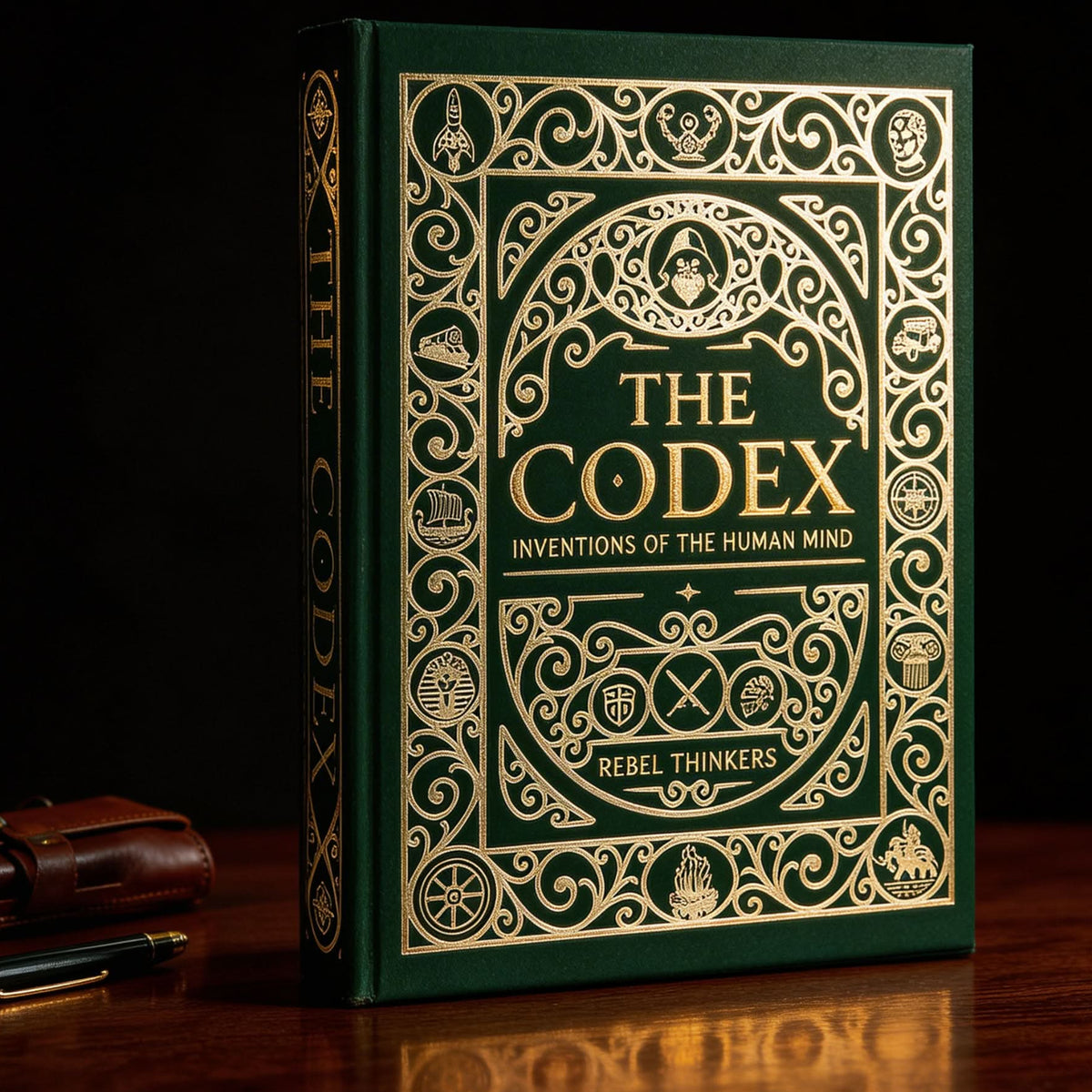
DER KODEX: ERFINDUNGEN DES MENSCHLICHEN GEISTES
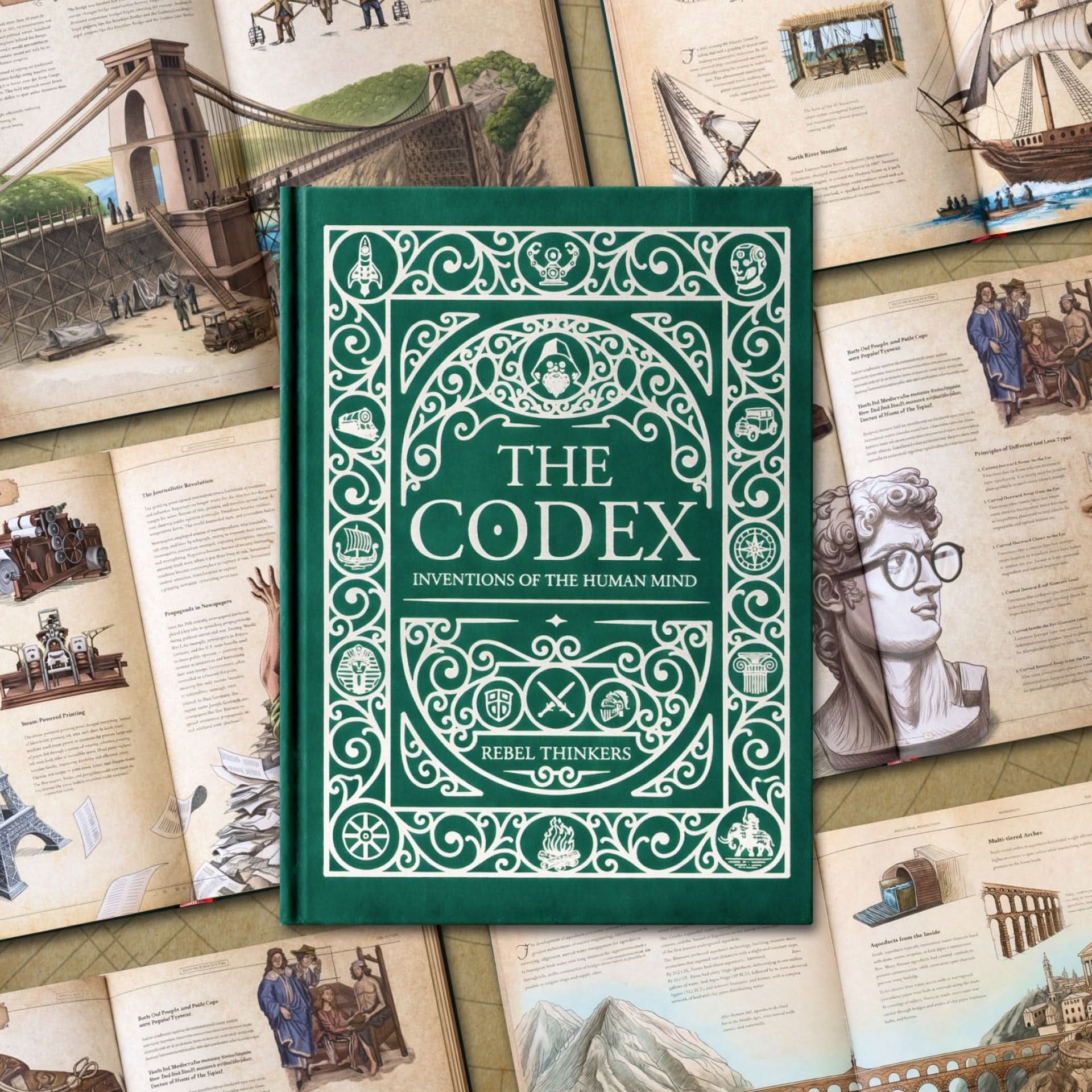
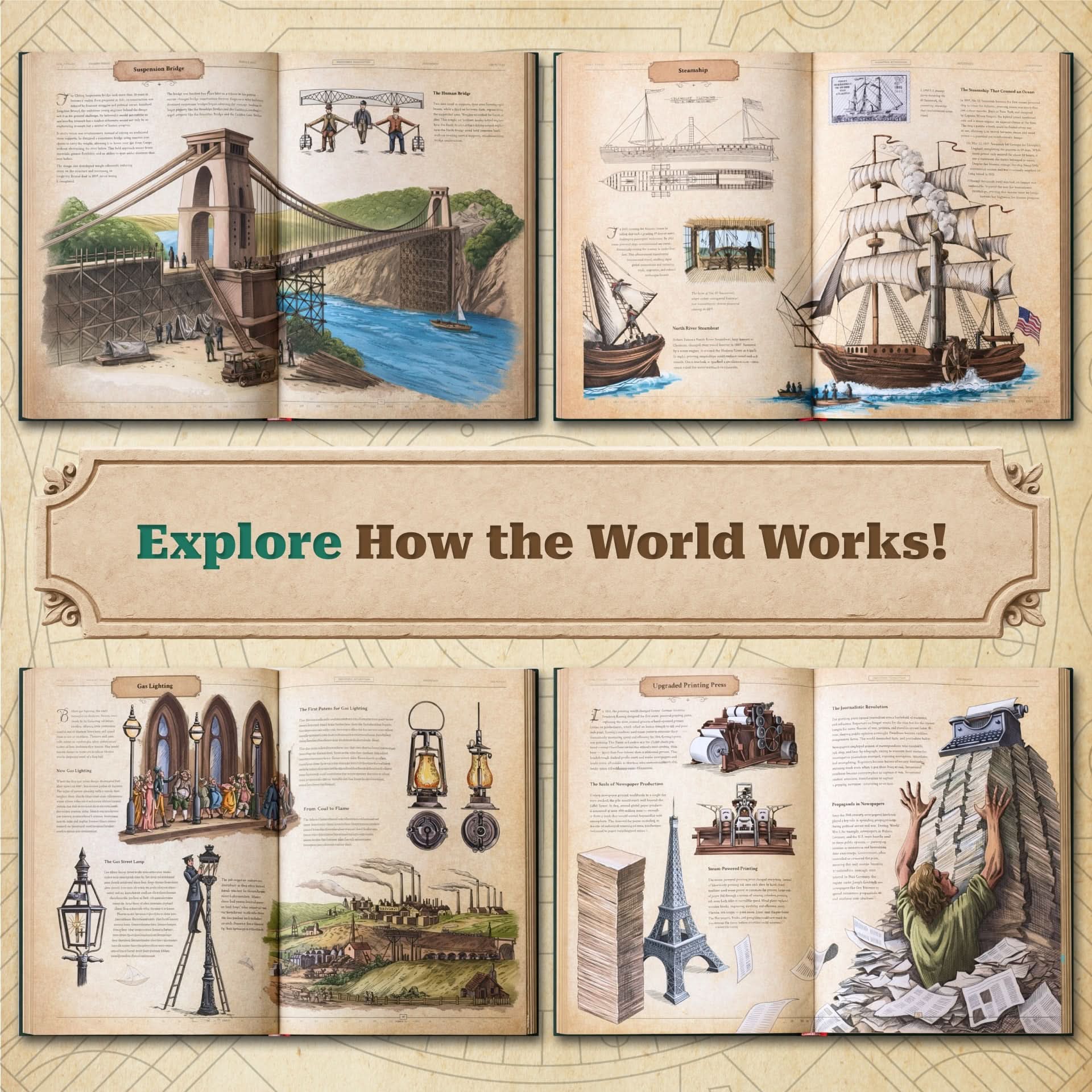
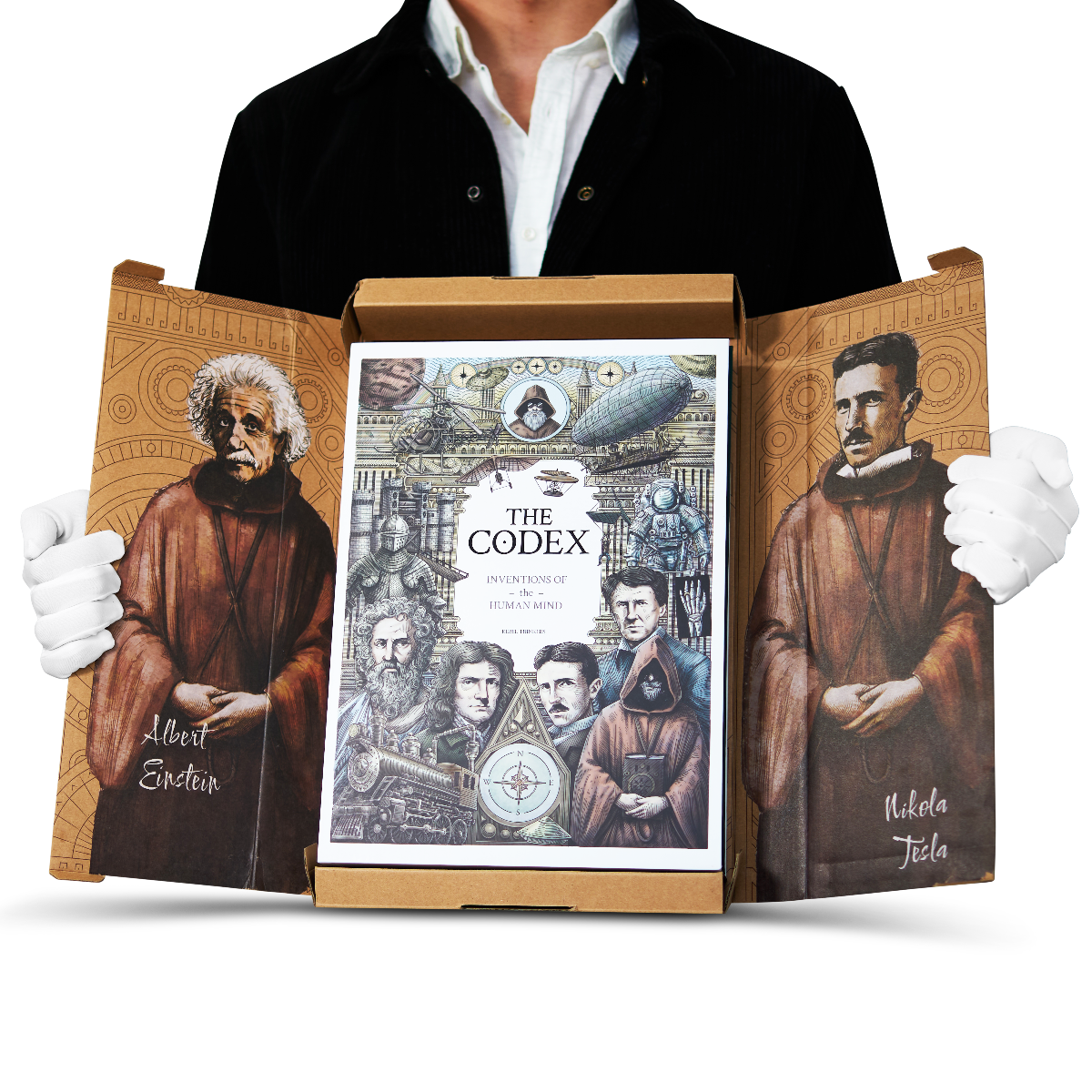
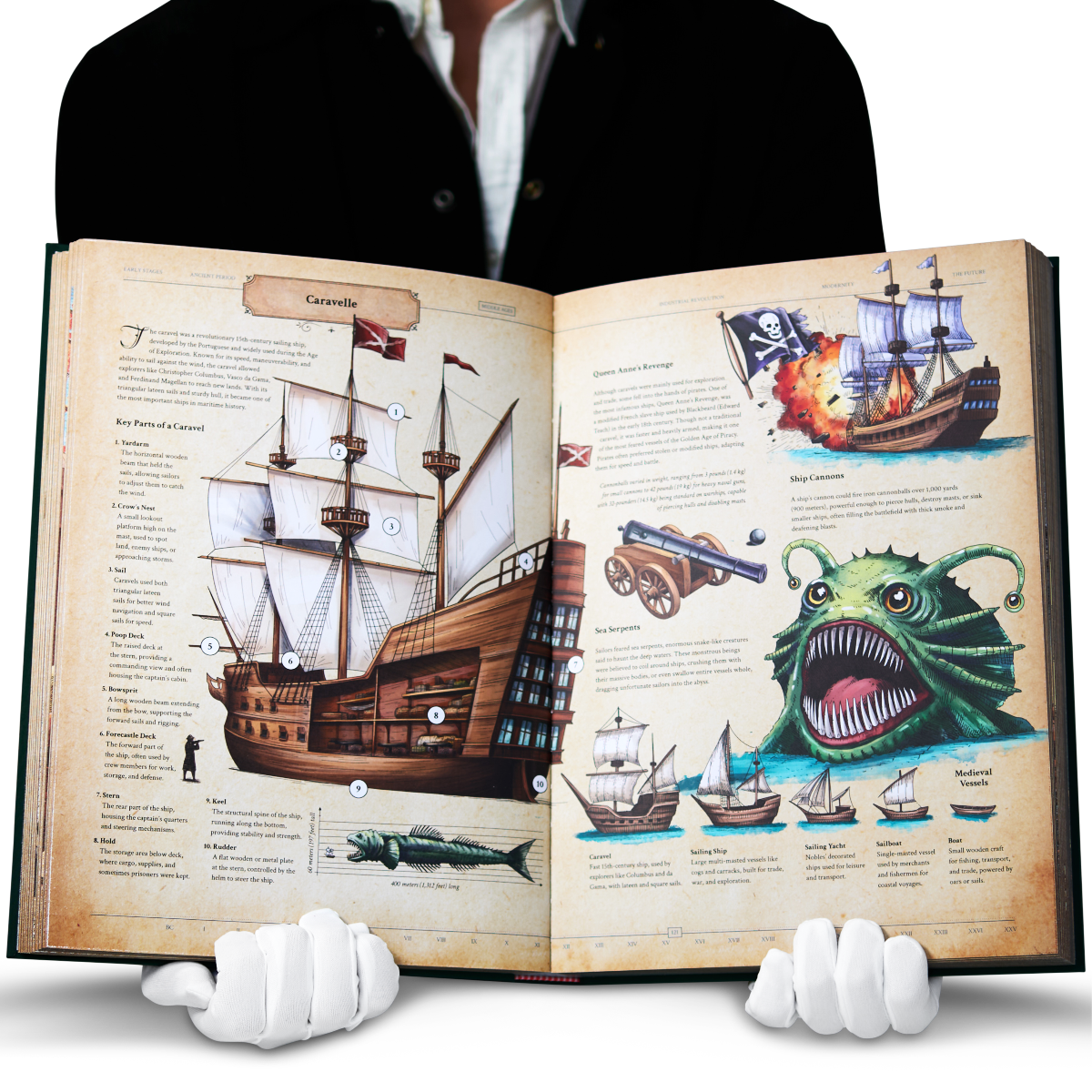
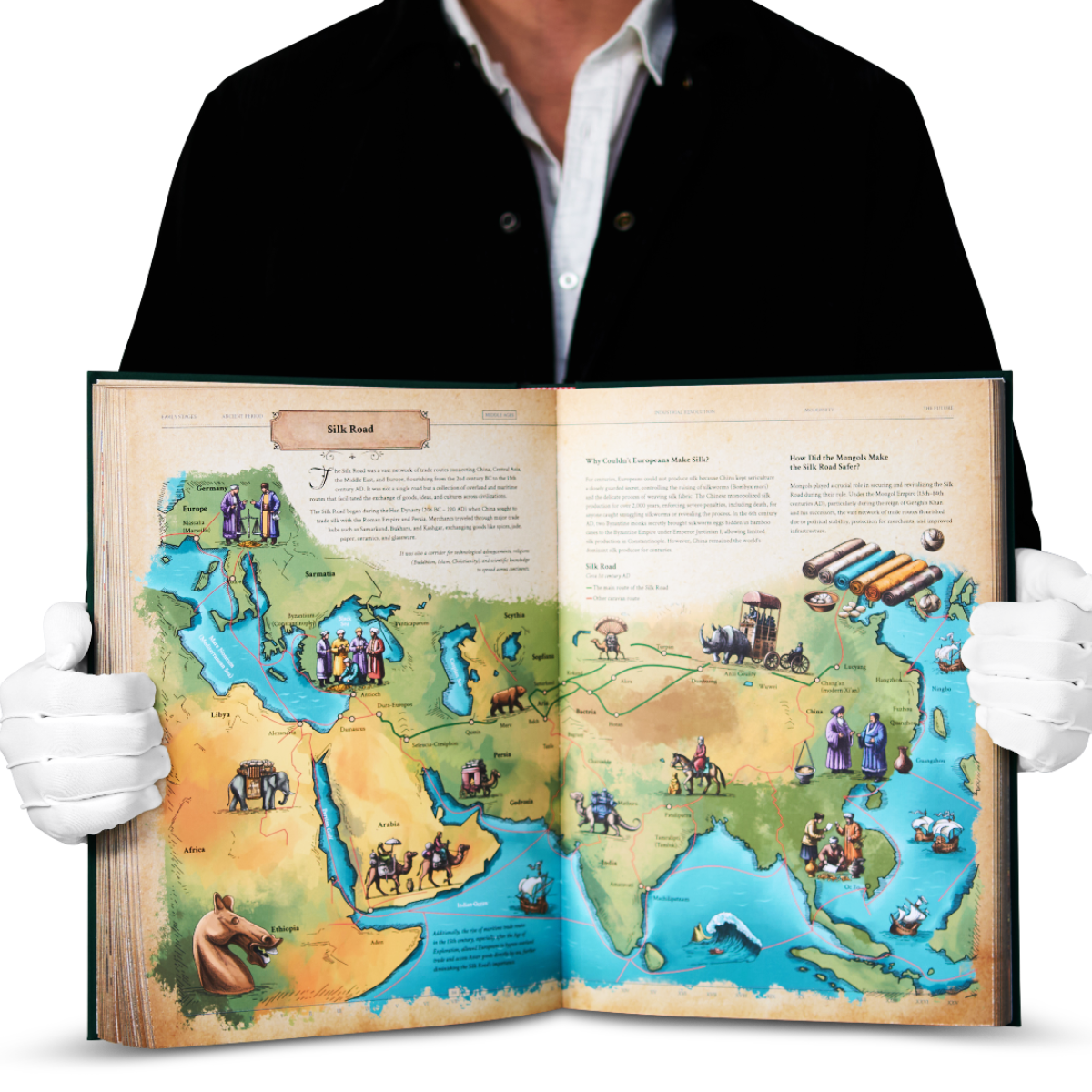
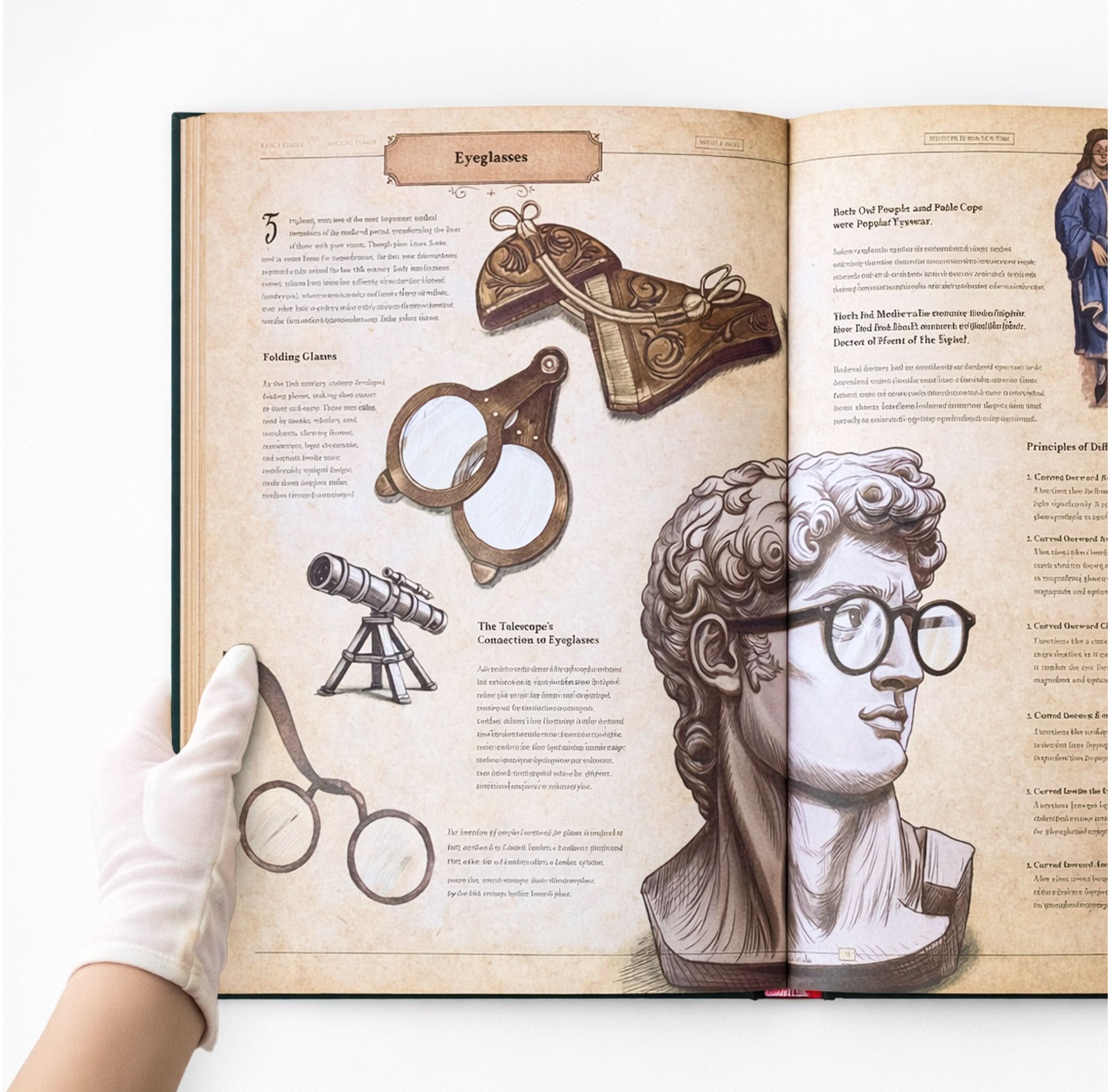
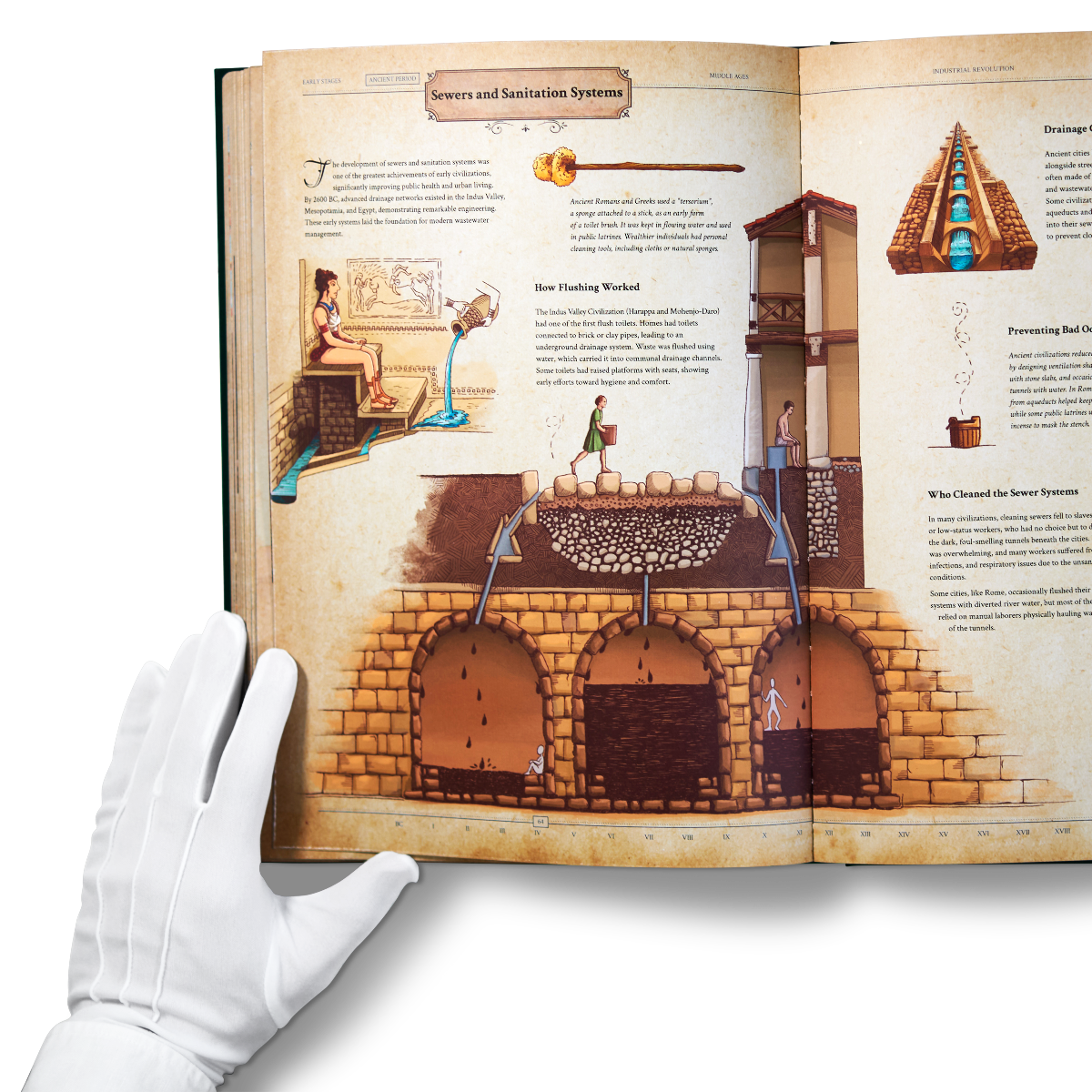
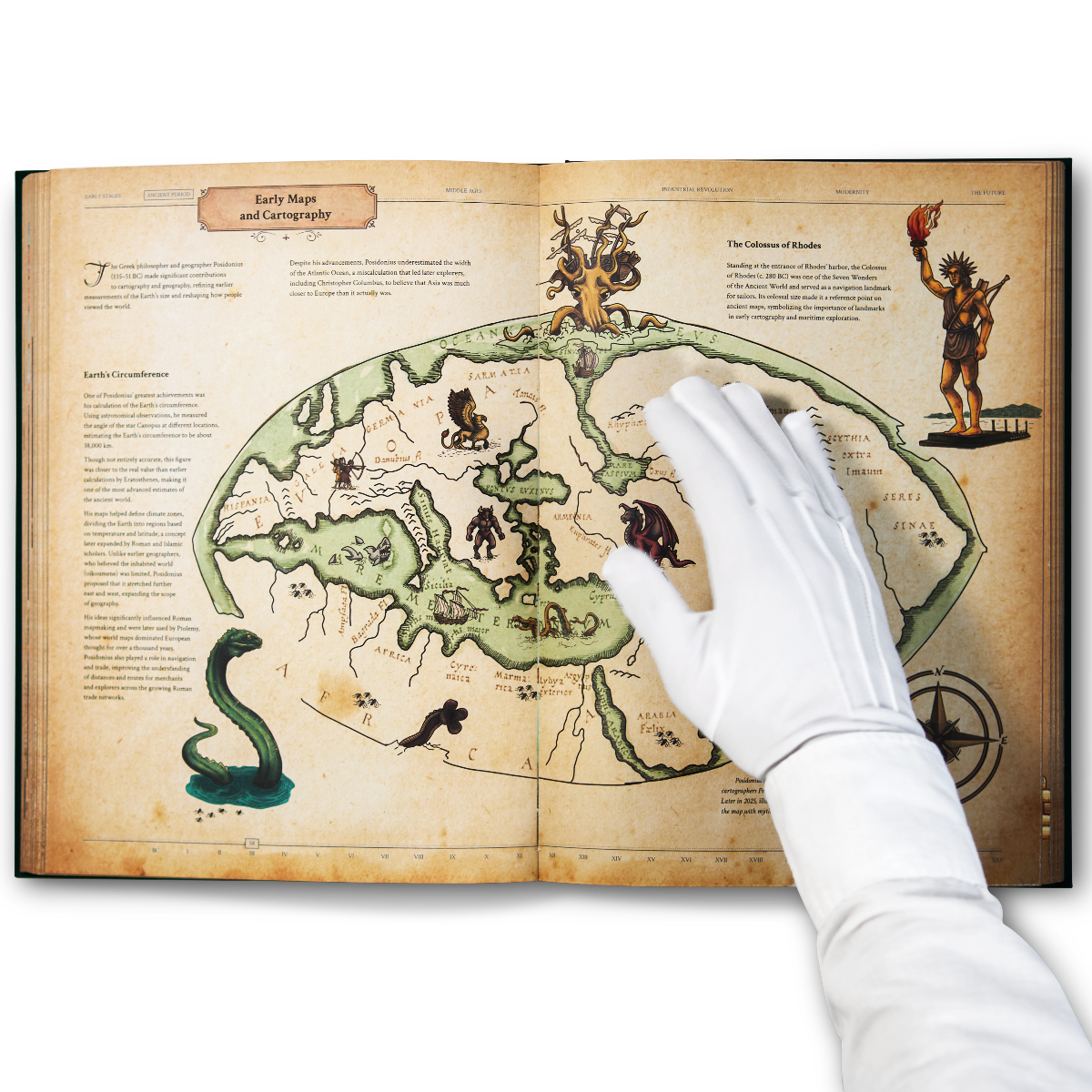
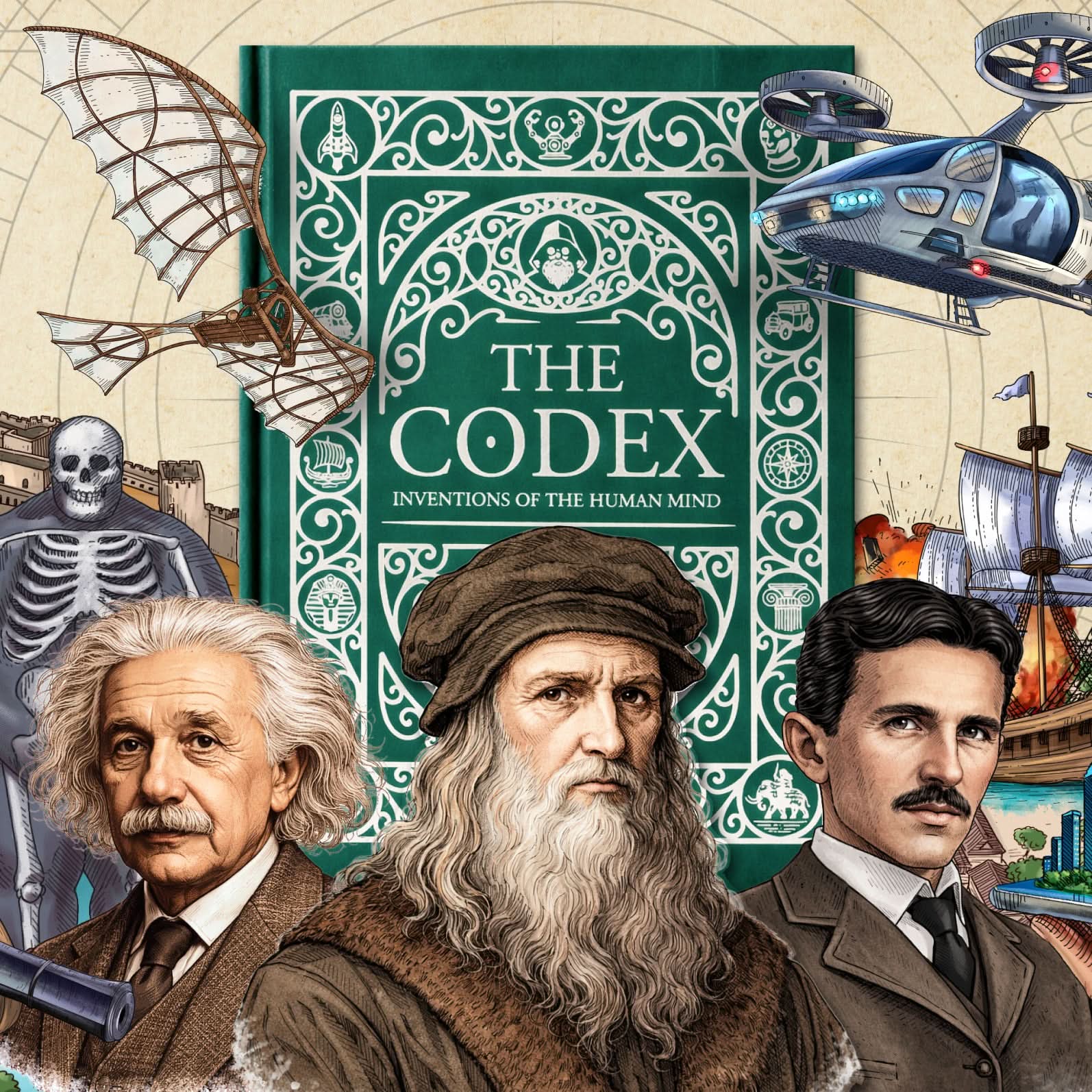
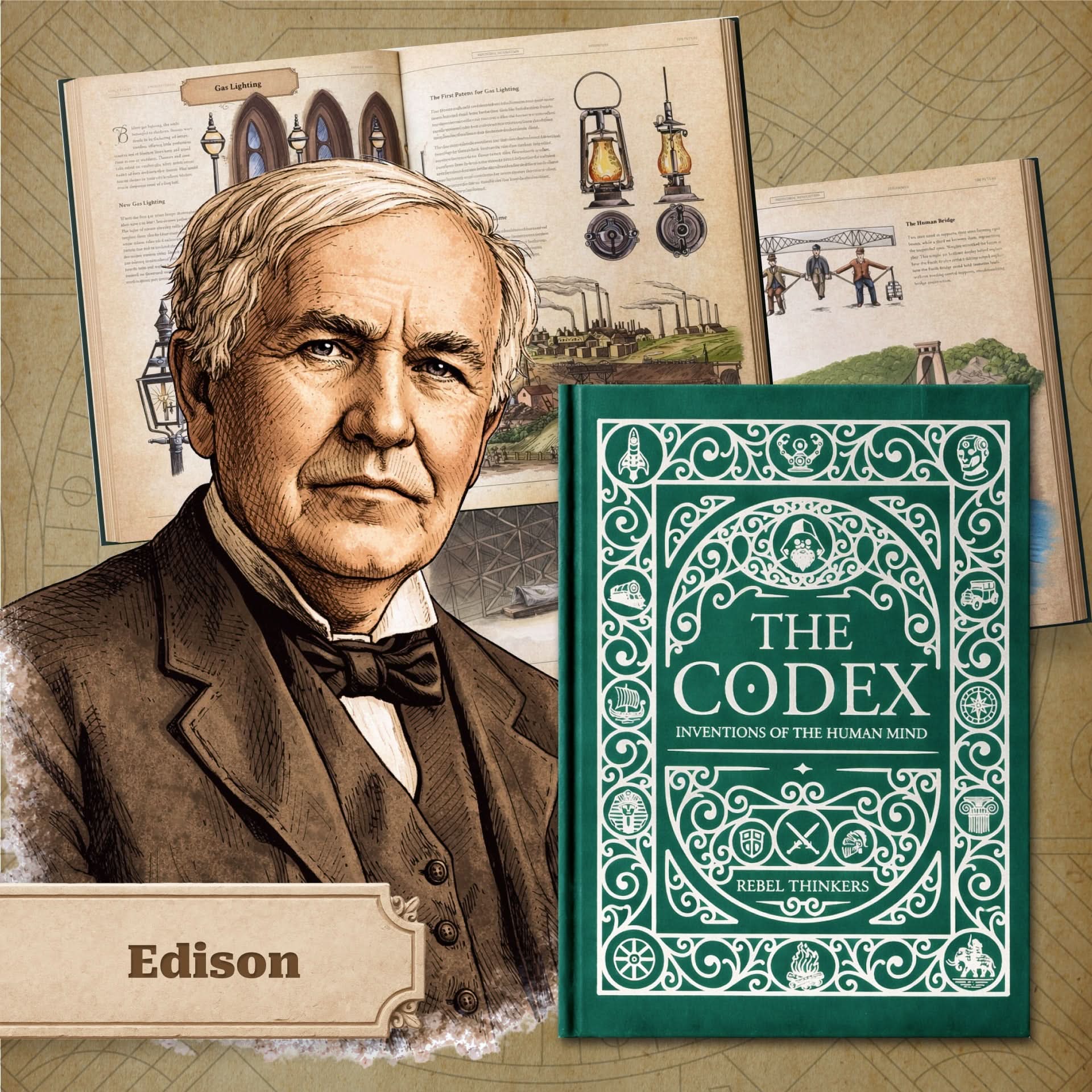
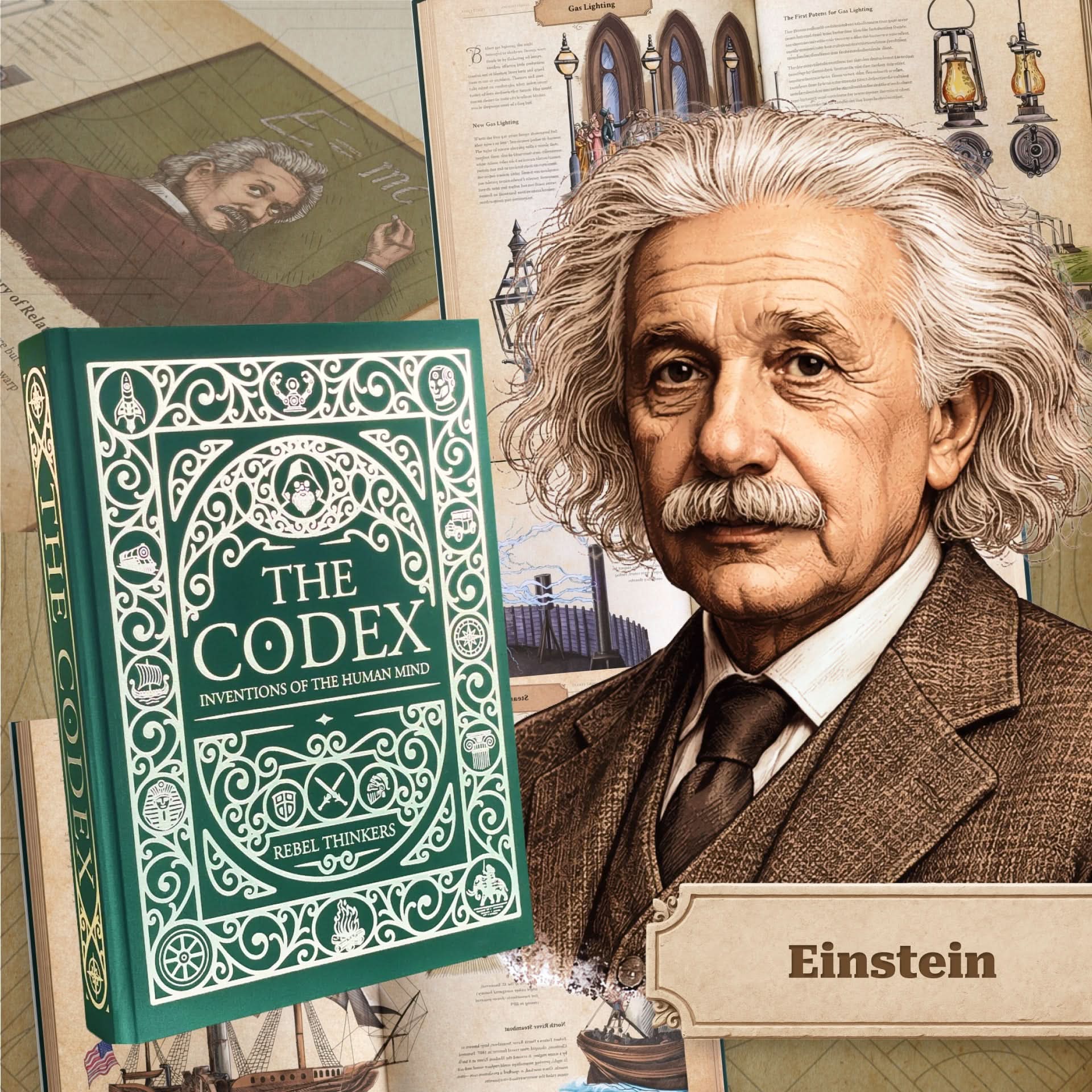
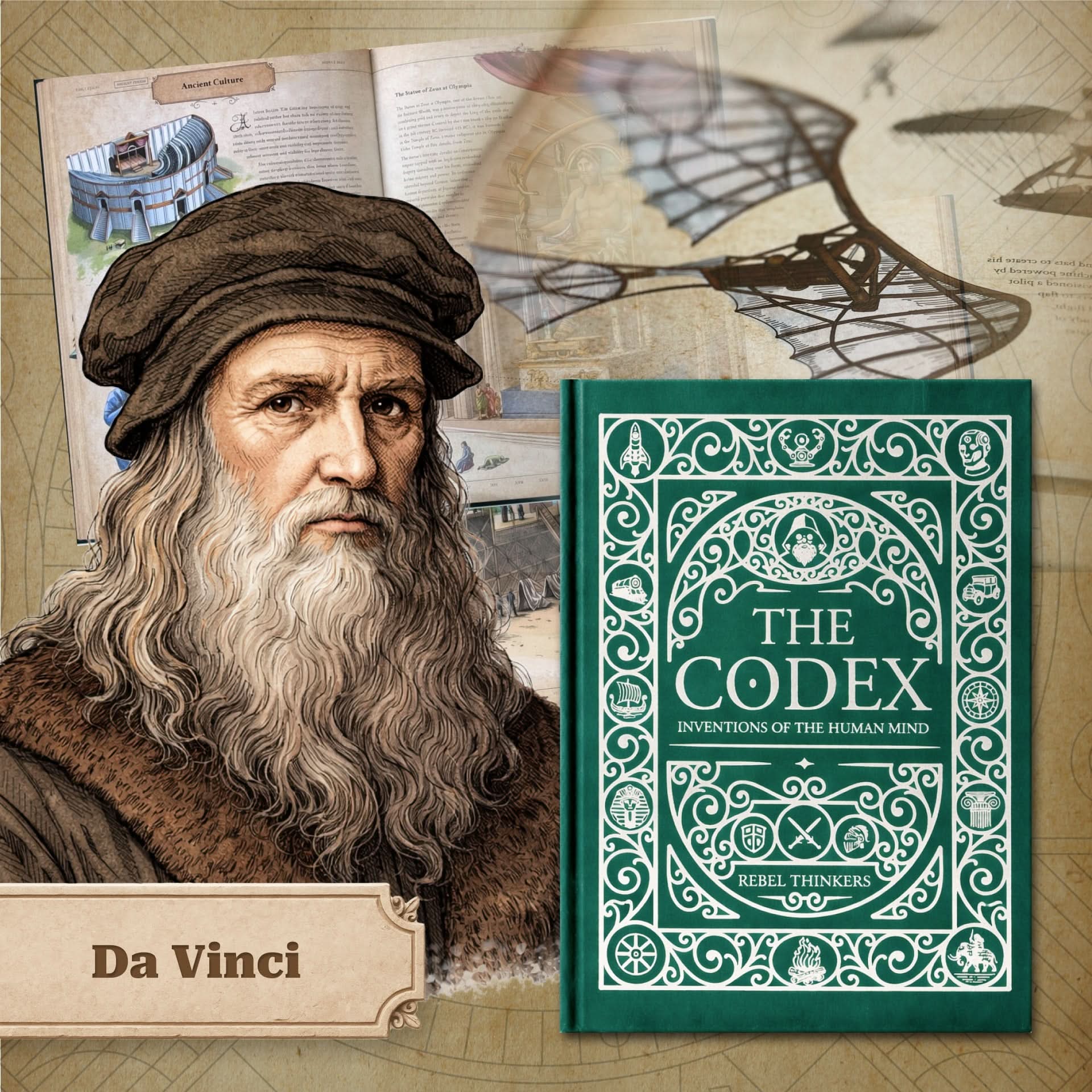
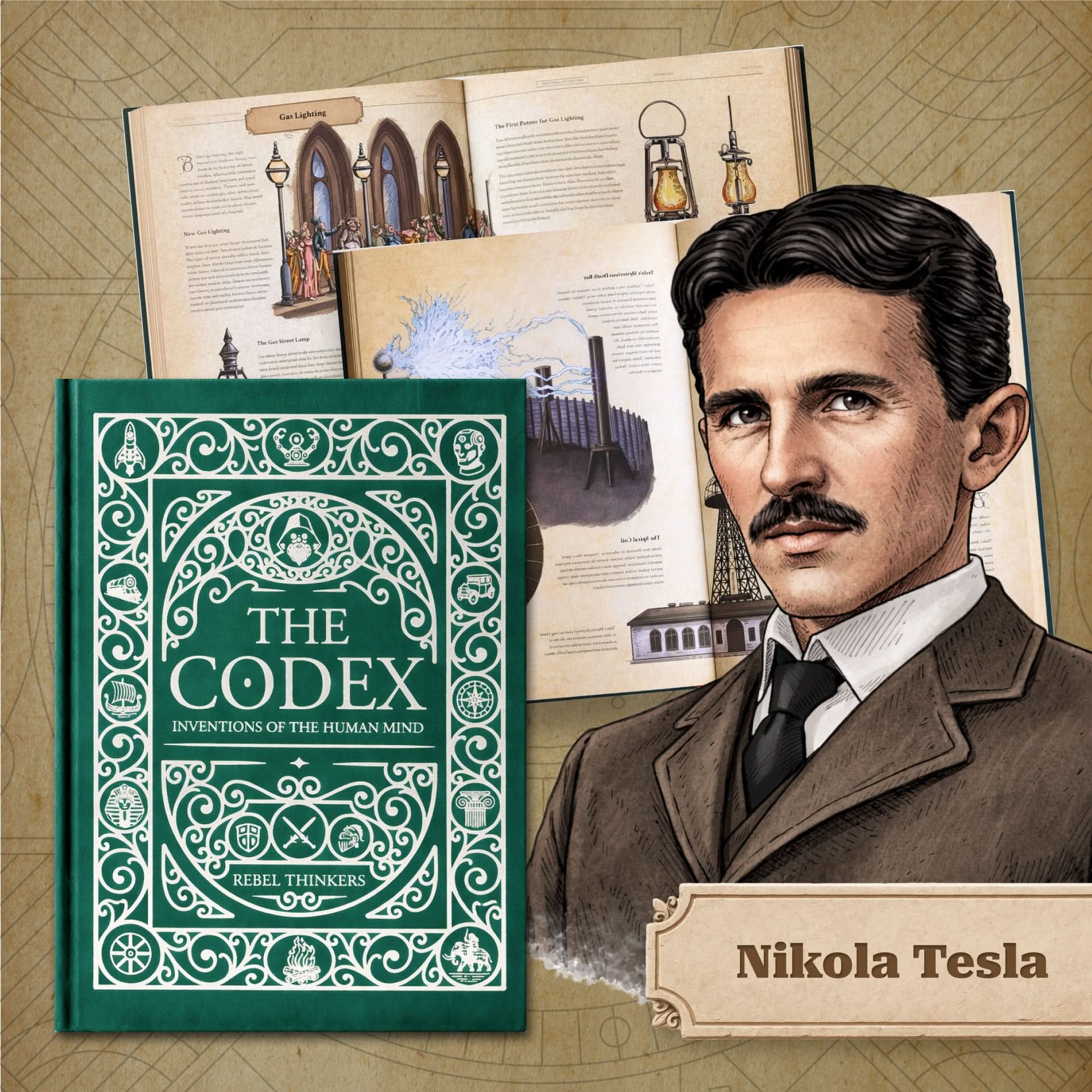
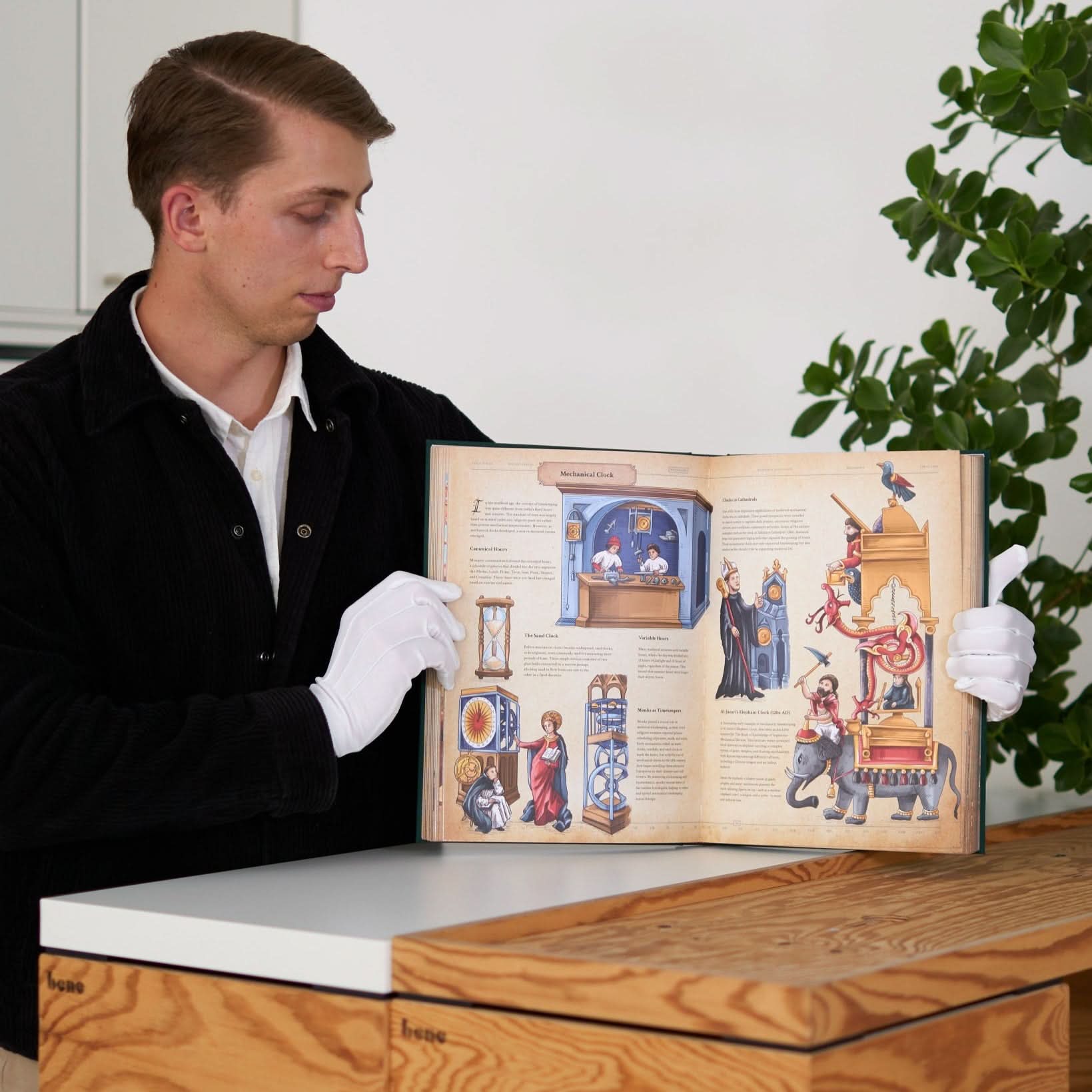
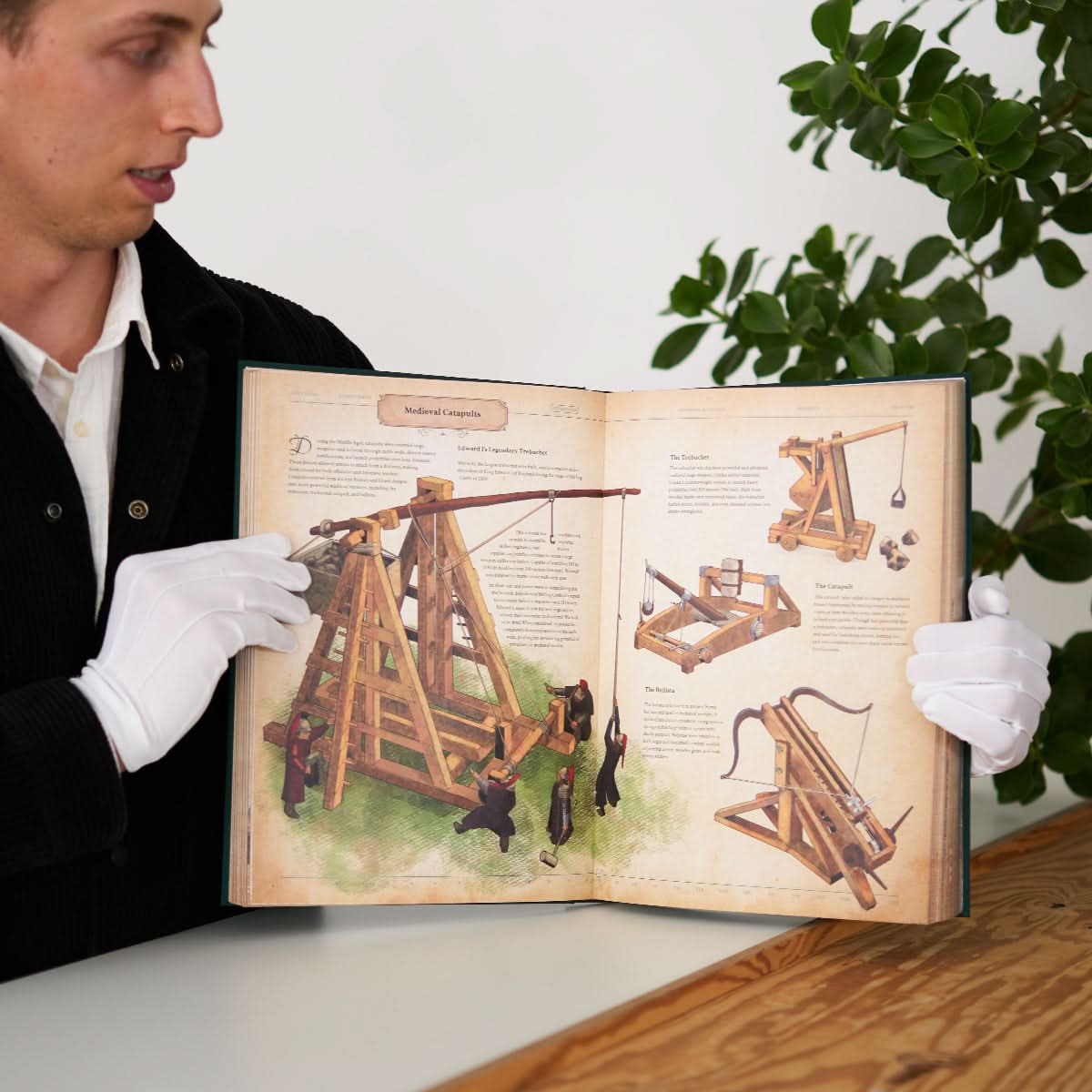
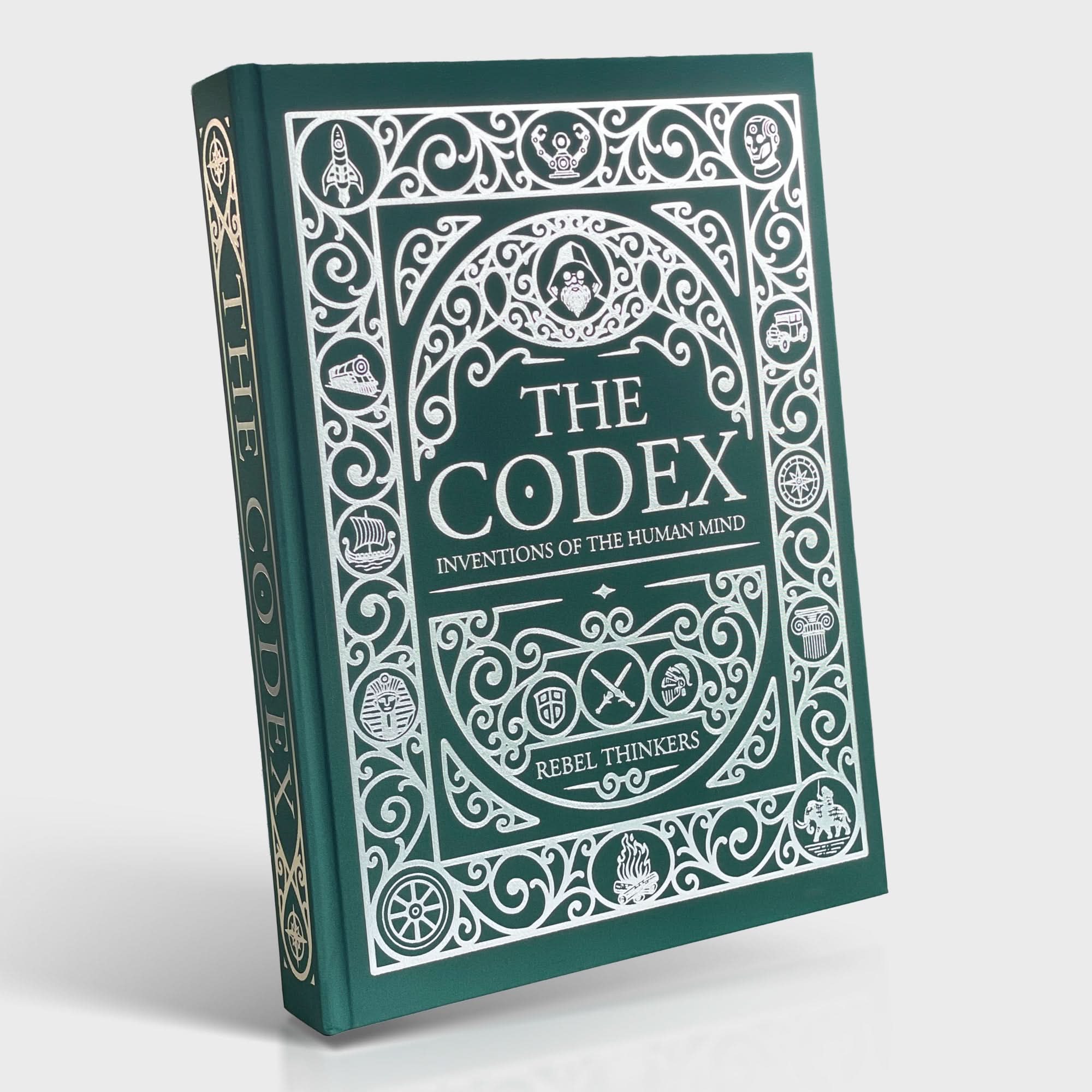
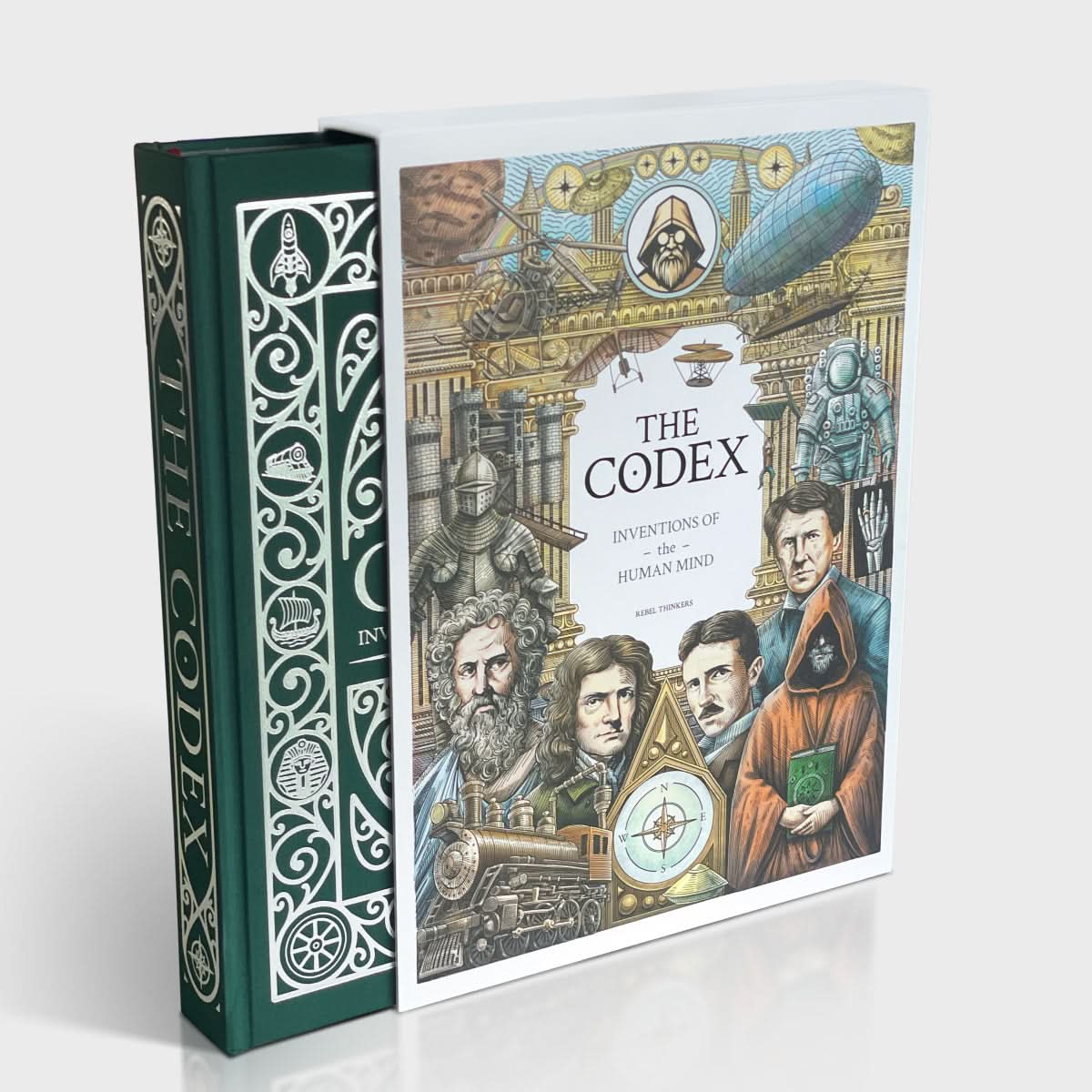
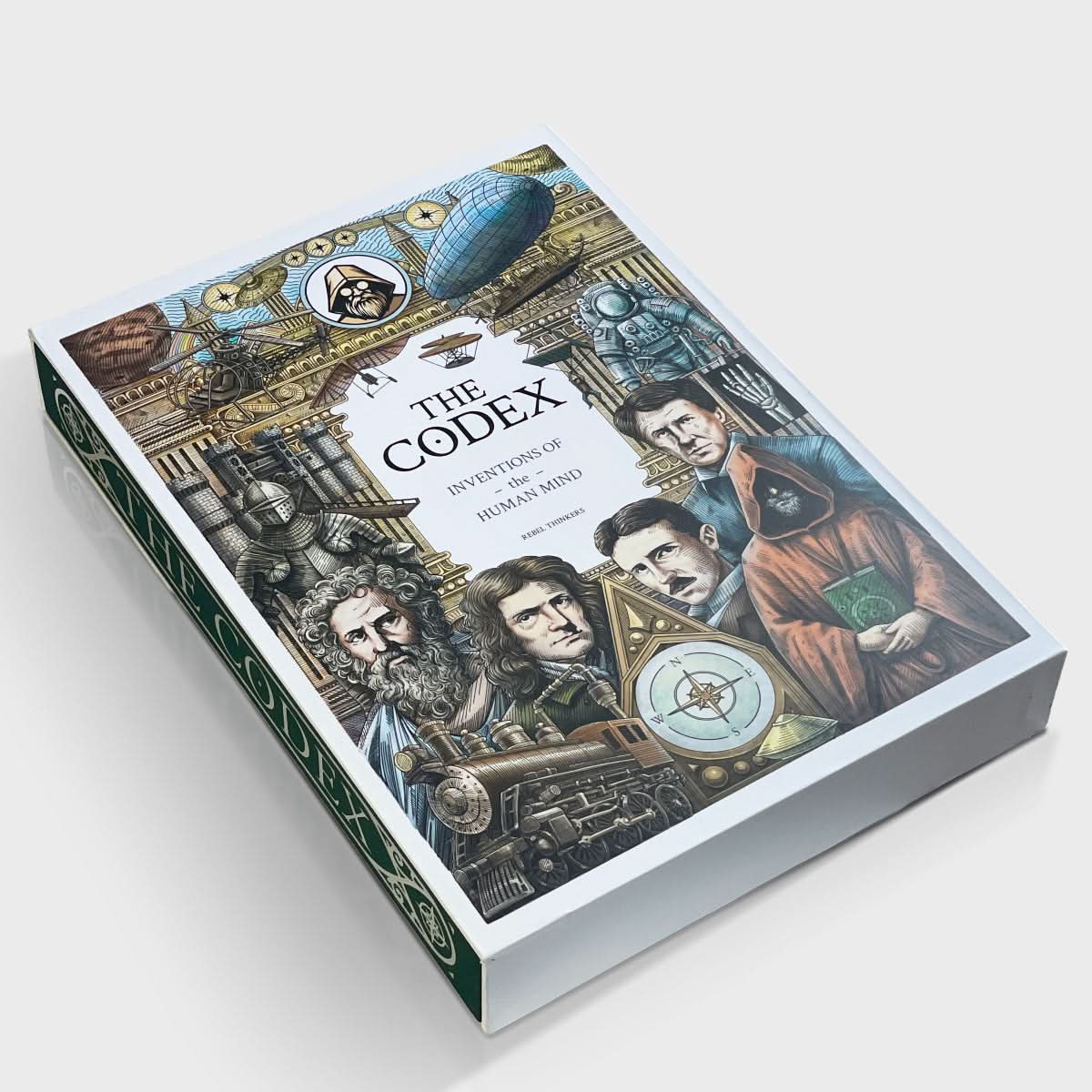
Der Kodex ist eine 350-seitige illustrierte Enzyklopädie von Erfindungen und Erfindern, die von ukrainischen Künstlern in einem von Da Vinci inspirierten mittelalterlichen Stil erstellt wurde. Avicenna. Leonardo da Vinci. Isaac Newton. Nikola Tesla. Albert Einstein. Das Rad, die Druckerpresse, die Dampfmaschine, die Armbrust, das Internet – jedes einzelne von innen gezeigt, in der Tradition von Da Vincis eigenen Notizbüchern. Nicht beschrieben. Illustriert. Mechanisch. So, wie die Menschen, die sie gebaut haben, sie gezeichnet hätten.
- Von ukrainischen Künstlern während der Kriegszeit geschaffen
- Illustriert im mittelalterlichen Stil nach Da Vinci
- Entdecken Sie die Erfindungen, die die Geschichte verändert haben
- Jede Seite ist handgezeichnet
Tesla ist einer von 150 Erfindern, die im Kodex „Erfindungen des menschlichen Geistes“ dokumentiert sind.

150 Erfindungen. Sechs Epochen. Ein kontinuierliches Argument.
Die meisten illustrierten Geschichtswerke sind kuratiert. Sie wählen die berühmten Momente aus und überspringen das Verbindende.
Der Kodex kuratiert nicht. Er sequenziert.
Er beginnt mit dem Feuer – der ersten menschlichen Technologie, der Erfindung, die unsere Vorfahren von jeder anderen Spezies trennte – und baut vorwärts, Erfindung für Erfindung, jede in ihrer Beziehung zu dem, was davor war und was sie ermöglichte.

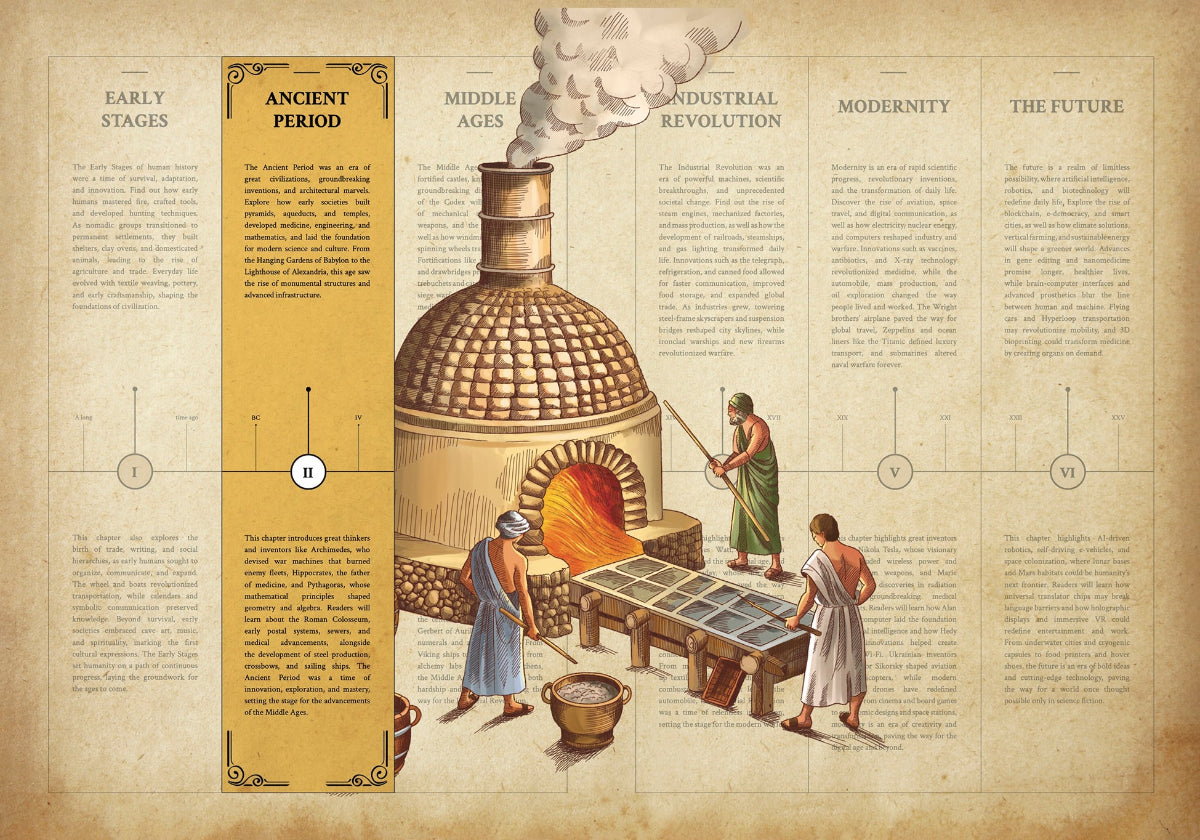
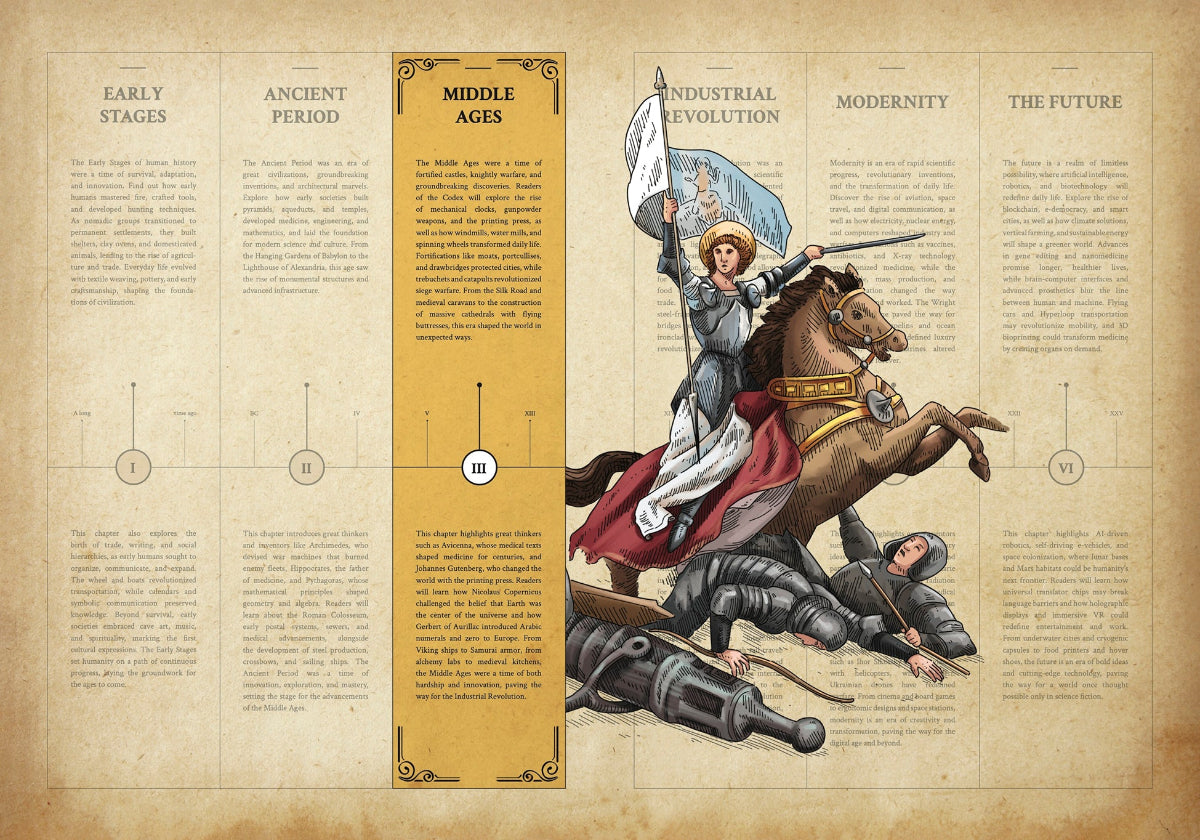
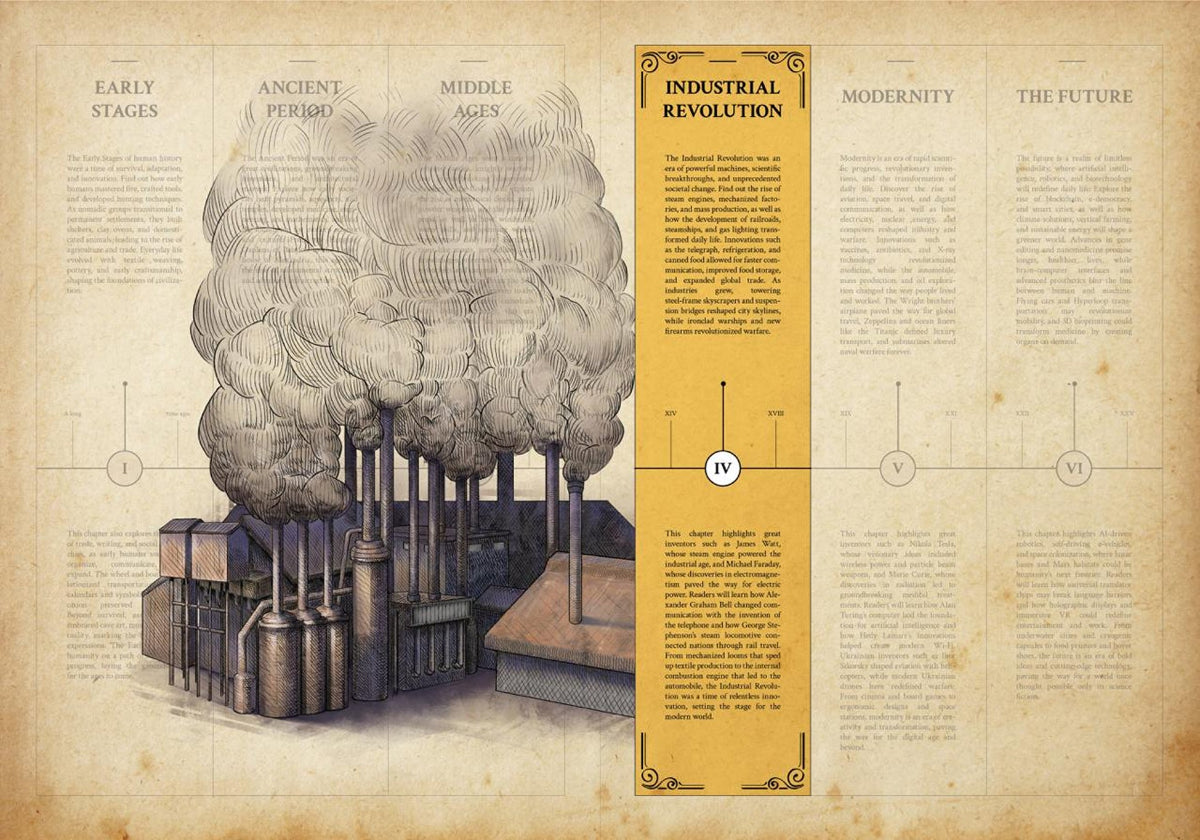
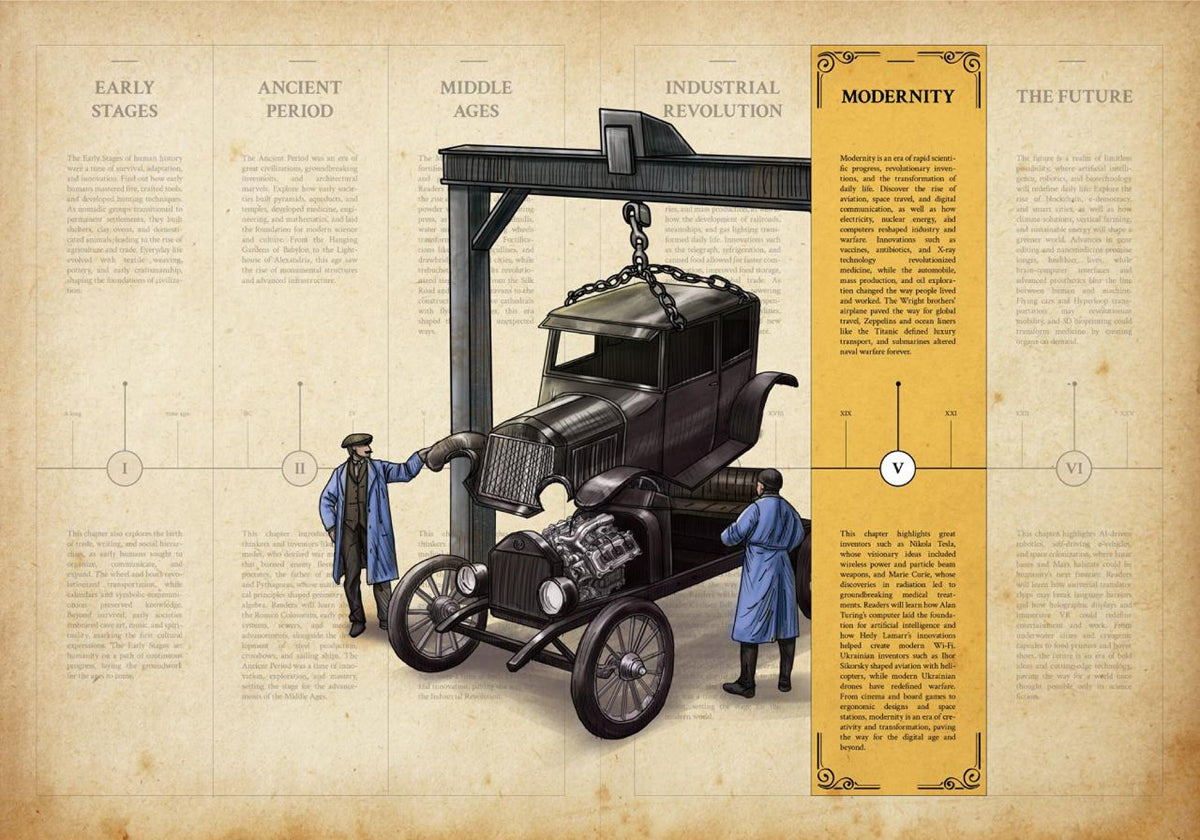
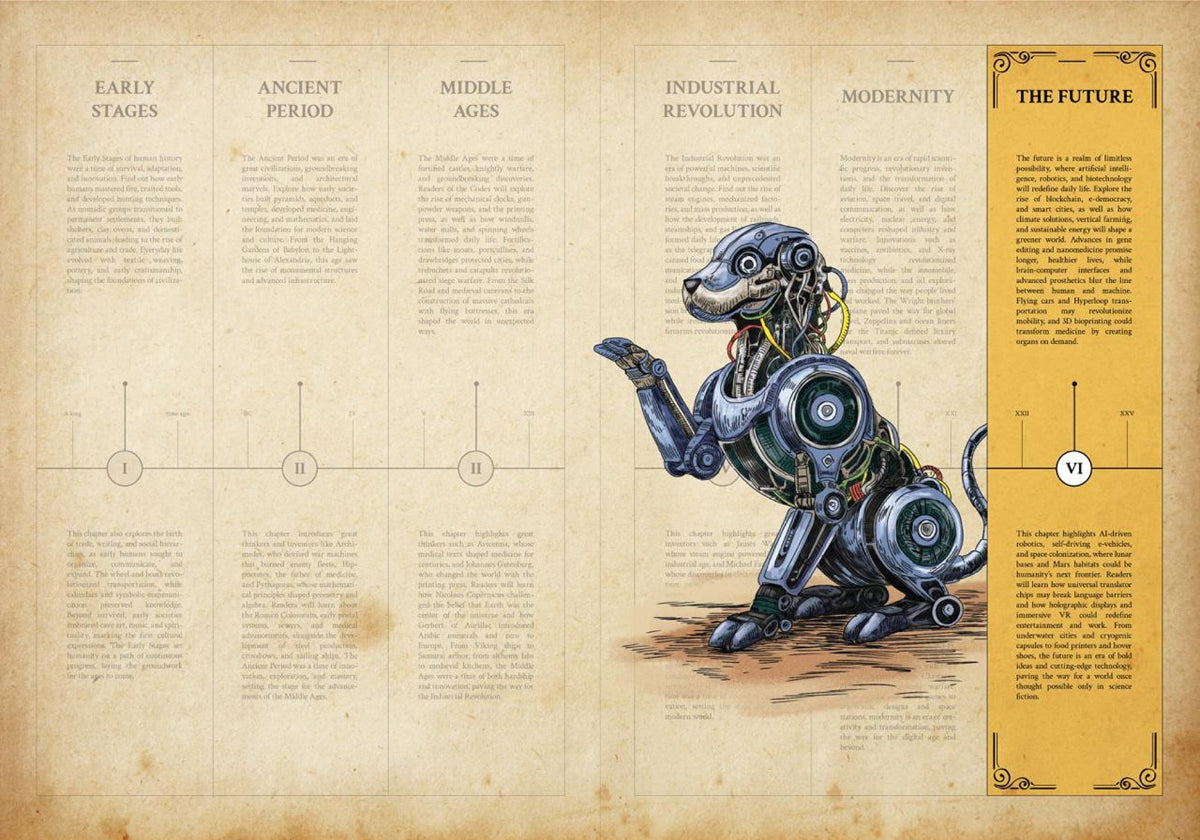
Feuer → das Rad → die Druckerpresse → die Dampfmaschine → der Transistor → künstliche Intelligenz.
Jede Erfindung wird in ihrer Beziehung zu dem, was ihr vorausging, und dem, was sie als Nächstes ermöglichte, gezeigt. Keine kuratierte Highlights-Rolle. Die ganze Kette.
Dann die Epochenliste – aber im komprimierten visuellen Format (die Radgrafik, die Sie bereits haben, funktioniert hier perfekt). Lassen Sie die Grafik die Epochen tragen. Duplizieren Sie sie nicht in Prosa.
„Dies ist der Anti-Temu-Kauf des Jahres. Der Codex ist ein massives Meisterwerk von bleibendem Wert, das sich anfühlt, als würde man auf Leonardo da Vincis private Tagebücher stoßen. Wenn Sie einen Bildband suchen, der die Leute tatsächlich dazu bringt, ihre Telefone wegzulegen, dann ist das der Richtige.“
Joey M., verifizierter Käufer, Boston, USA
Die Schöpfungsgeschichte des Kodex
Der Kodex wurde von drei Freunden aus Kiew – Vlad Khvyshchuk, Nazar Ozhho und Danylo Ozhho – geschaffen, die der Meinung waren, dass die größten Erfinder der Geschichte so dargestellt werden sollten, wie es Leonardo da Vinci getan hätte: in allen mechanischen Details, mit der Hand auf jeder Seite sichtbar.
Zwölf ukrainische Illustratoren arbeiteten drei Jahre lang daran. Einige arbeiteten während der Invasion 2022 weiter. Einige arbeiteten bei Kerzenlicht. Das Ergebnis war eine Spendensumme von 508.241 $ von 5.327 Kickstarter-Unterstützern – eines der am besten finanzierten illustrierten Buchprojekte in der Geschichte dieser Plattform.
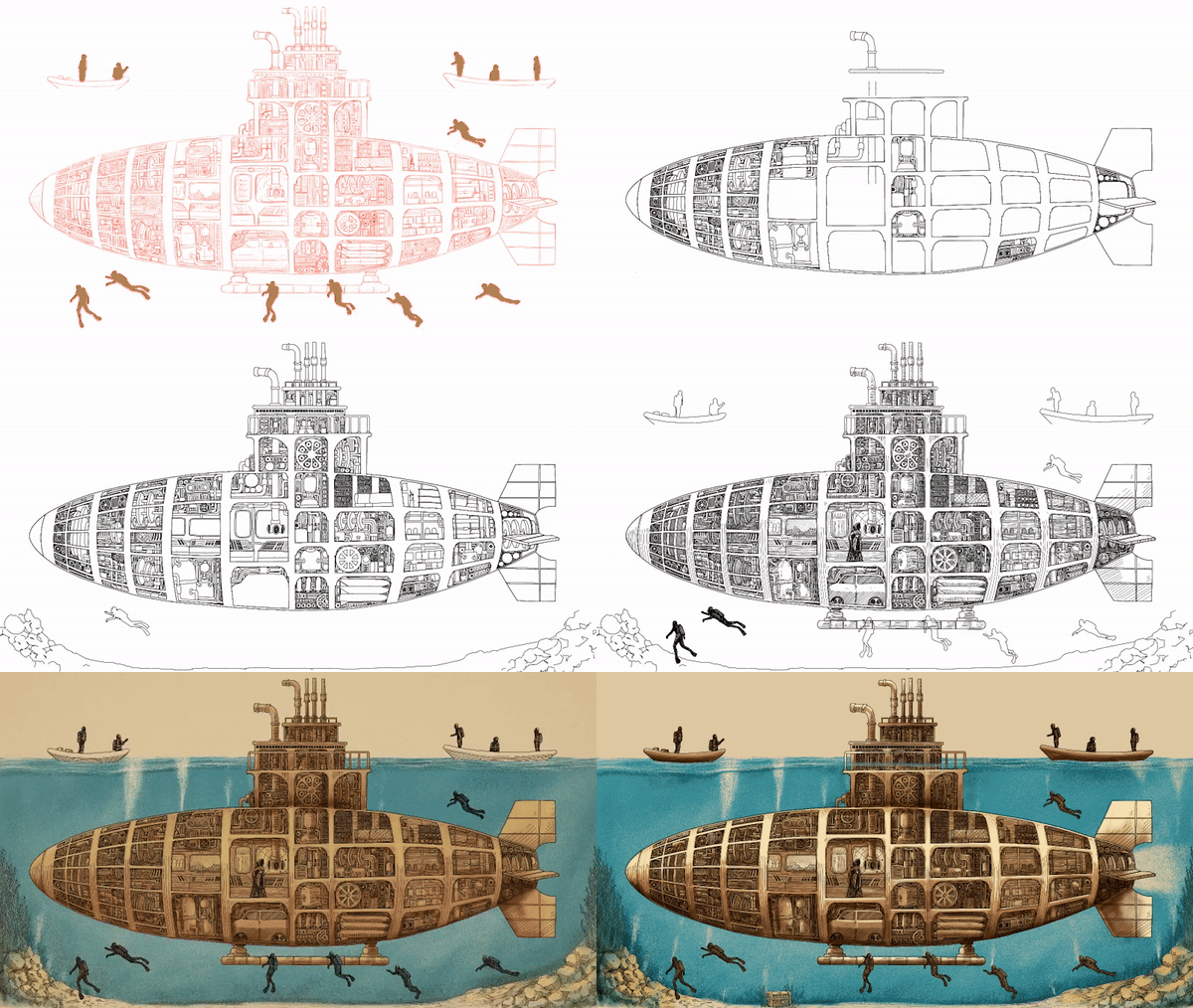
- 328+ Seiten über 6 Epochen hinweg
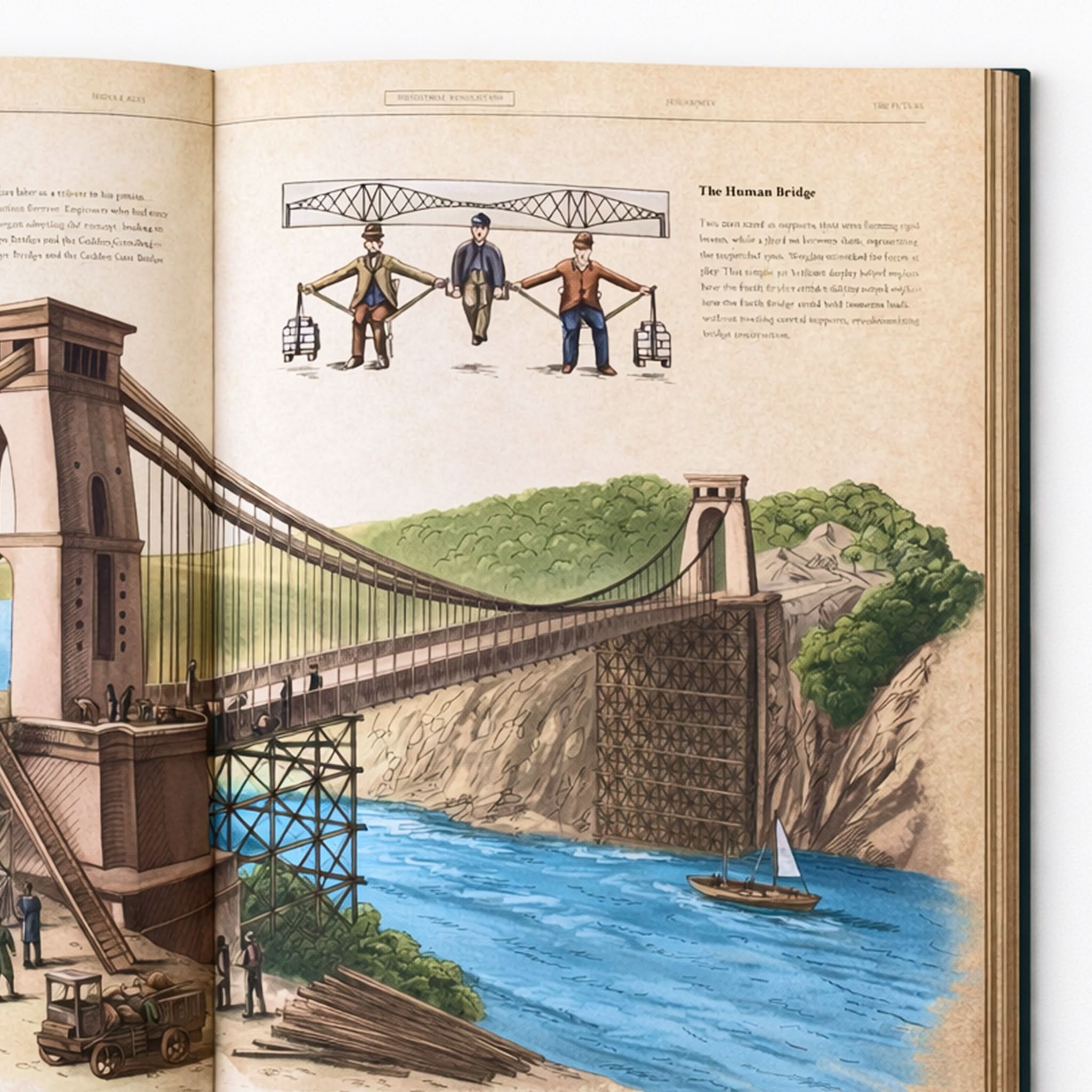
- Jede Erfindung im Da-Vinci-Stil illustriert: Querschnitte, Anmerkungen, mechanische Diagramme
- Von Historikern recherchiert und verifiziert — keine illustrierte Fantasie, sondern dokumentierte Realität
- Format 14 × 10 Zoll – größer als DIN A4, entwickelt, um Illustrationen in voller Größe lebendig wirken zu lassen
- 160 g/m² mittelalterliches Papier – das Gewicht und die Textur eines Manuskripts, nicht eines Magazins

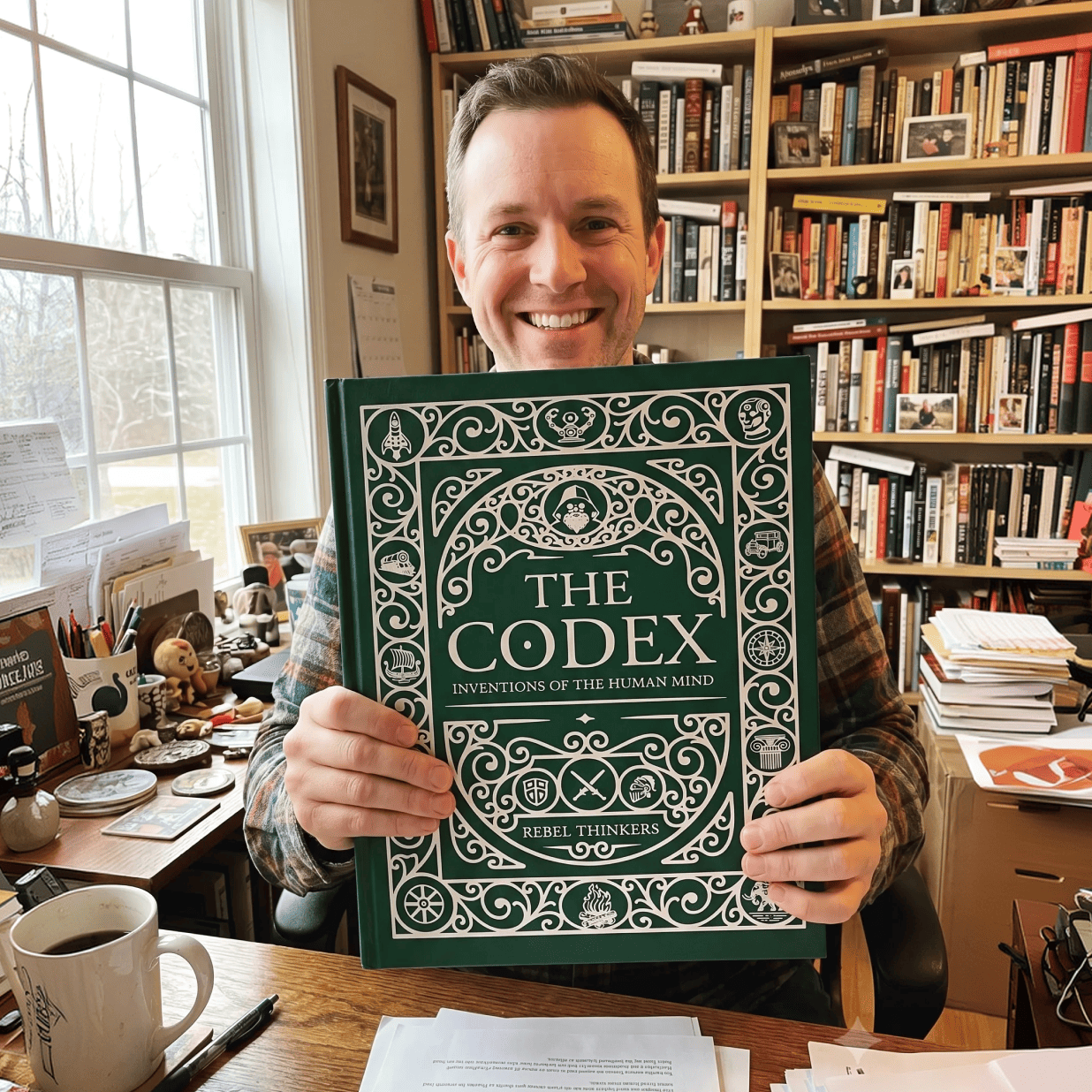

Der Codex ist ein MUST-HAVE. Das Internet ist voller Ungenauigkeiten – hier sind recherchierte und verifizierte historische Fakten. Er sieht aus wie ein mittelalterlicher Codex, aber alle Erfindungen sind bis ins Detail korrekt dargestellt. Ein dickes Buch, exzellente Qualität, gute Bindung, tolle Haptik. Es ist ein wirklich anderes Gefühl, dieses Buch in der Hand zu halten, anstatt etwas online nachzuschlagen.
Ich habe das Buch vor ein paar Tagen erhalten und es ist einfach ein einzigartiges Kunstwerk. Die riesige Menge an Arbeit, Liebe und Detail zeigt sich deutlich auf jeder Seite. Es ist eines der wenigen Bücher, die ich meinen Enkelkindern als zeitlosen Klassiker vererben möchte. Herzlichen Glückwunsch an das Team – eine klare Demonstration ukrainischer Handwerkskunst und Unternehmertums.

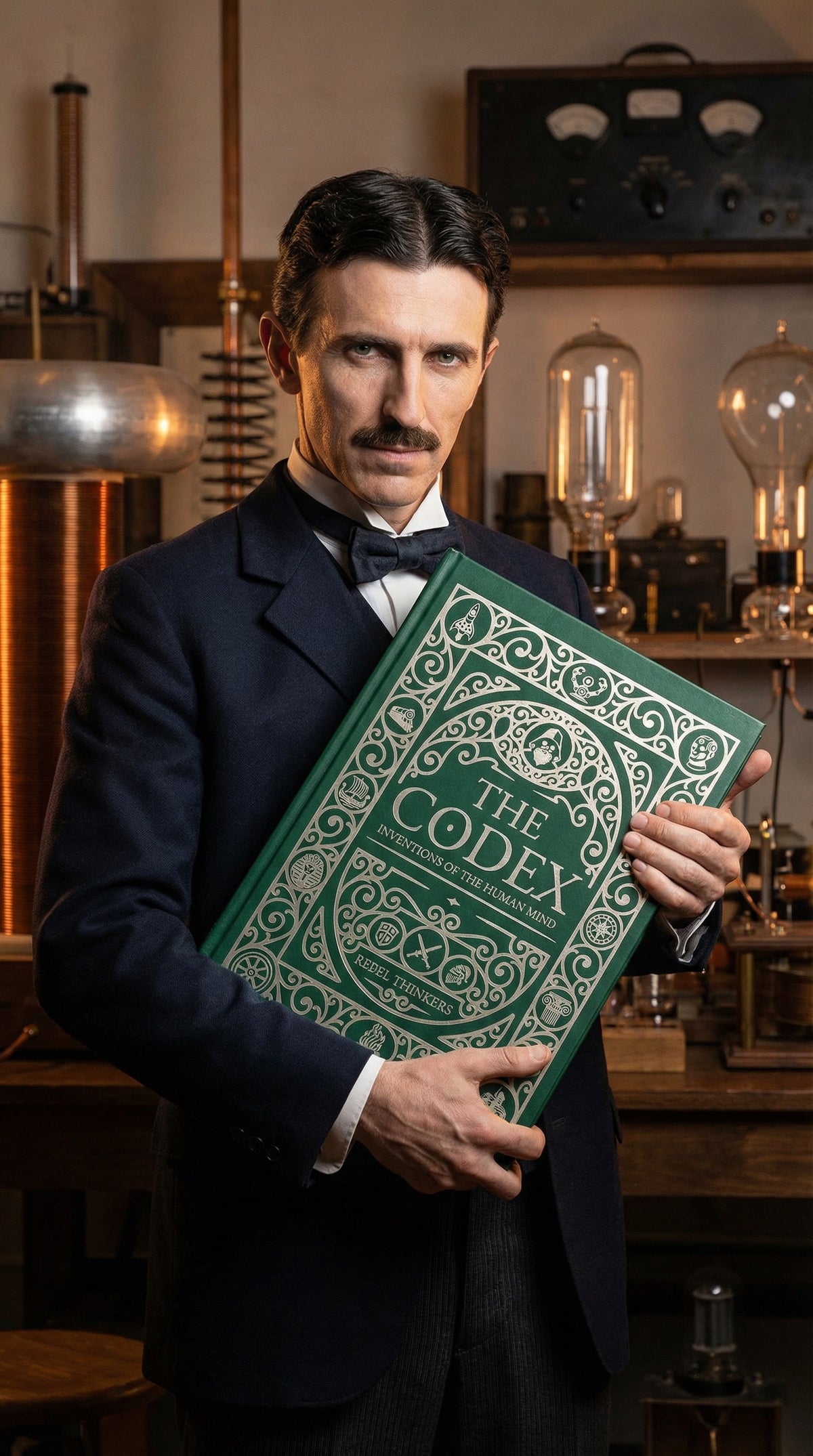
Der Kodex: Erfindungen des menschlichen Geistes
150 Erfindungen und Erfinder. 350 Seiten. Über 12 ukrainische Künstler. Die komplette visuelle Geschichte menschlicher Erfindungen – vom Feuer bis zur künstlichen Intelligenz – gezeichnet in der Tradition von Leonardo da Vincis Notizbüchern.
- 5,0 ★ ★★★★ — 55 verifizierte Bewertungen
- Über 12.000 Kunden
- Lieferzeit 2-5 Tage!
Fragen von Geschichtsinteressierten
Ist das wirklich informativ, oder ist es hauptsächlich visuell? Ich wurde schon von schönen Büchern enttäuscht, die oberflächlich waren.
Das häufigste, was Geschichtsinteressierte nach Erhalt des Codex sagen, ist, dass er ihre Erwartungen an die Tiefe übertroffen hat – und diese waren bereits hoch. Die visuelle Methode ist keine Dekoration. Jede Illustration basiert auf historischer Forschung, wird von Historikern verifiziert und wurde entwickelt, um den Mechanismus zu erklären, anstatt ihn darzustellen. Ein Käufer beschrieb es als den Unterschied zwischen dem Lesen, dass die Druckerpresse alles verändert hat, und dem tatsächlichen Verständnis, wie sie funktionierte. Das gesagt: Es ist kein wissenschaftlicher Text mit Fußnoten. Es ist eine visuelle Enzyklopädie. Wenn Sie Zitate und Bibliografie wünschen, ist dies nicht das Richtige. Wenn Sie endlich verstehen wollen, wie eine Dampfmaschine, eine Armbrust oder eine Tesla-Spule tatsächlich funktioniert haben – dann ist dies genau das Richtige.
Wie funktioniert der Da-Vinci-Stil eigentlich als Methode? Ist es ein Gimmick oder hat es Substanz?
Es ist Substanz. Leonardo da Vinci zeichnete Maschinen nicht im Stil mittelalterlicher Manuskripte, weil es schön war. Er verwendete Explosionszeichnungen, Querschnitte und kommentierte Diagramme, weil dies der effizienteste Weg war, um zu zeigen, wie ein dreidimensionales mechanisches Objekt auf einer zweidimensionalen Seite funktioniert. Der Kodex verwendet die gleiche Logik. Die Tesla-Spule, gezeichnet wie eine Manuskriptillustration von 1490, ist nicht ironisch – es ist die klarste mögliche Art zu zeigen, wie Wechselstrom erzeugt wird. Die Ästhetik und die Methode sind ein und dasselbe.
Deckt es nicht-westliche Erfinder und Erfindungen ab?
Ja, bewusst. Avicennas Beiträge zur Medizin, Zhang Hengs Seismograph und astronomische Instrumente, die mathematischen Grundlagen des Islamischen Goldenen Zeitalters, chinesische Erfindungen wie Schießpulver und der Kompass – diese werden neben den bekannteren europäischen Persönlichkeiten dokumentiert. Der Inhaltsplan umfasst 150 Erfindungen aus verschiedenen Zivilisationen, nicht nur aus dem westlichen Kanon.
Ist dies eine limitierte Auflage? Sollte ich jetzt bestellen?
Der Codex war seit seinem Kickstarter zweimal ausverkauft. Die aktuelle Auflage ist jetzt verfügbar. Bei früheren Auflagen gab es zwischen den Ausverkäufen keine bestätigte Nachdruckzeitlinie – es gab Lücken von mehreren Monaten. Wenn Sie ihn in Betracht ziehen, ist die aktuelle Auflage verfügbar und wird innerhalb von 3–8 Werktagen weltweit versandt. Wir können nicht bestätigen, wann die nächste Auflage erfolgen wird.